The quest for zero preventable accidents: Why fleet safety needs a new goal
Key takeaways
- A strong safety culture relies on driver engagement, consistent coaching, and accountability rather than accident-reduction targets alone.
- AI-powered in-cab alerts can help drivers recognize risky behaviors and make safer decisions in real time.
- Fleet case studies show varied crash reductions, underscoring the value of practical safety strategies tailored to fleet operations.

The fleet safety industry has entered a dangerous messaging cycle.
In recent years, fleet safety vendors have introduced increasingly sophisticated technologies to help protect drivers and prevent accidents, including AI-powered coaching systems and real-time in-cab alerts. These innovations have made great strides in improving road safety.
But as the technology has evolved, the conversation around it has increasingly turned into a competition over numbers rather than outcomes. One fleet safety company claims 50% accident reduction, another claims 70%, and another claims 80%.
On its face, this may look like healthy competition, but in reality, it’s a race to the bottom.
No fleet operator wakes up hoping for 20% fewer preventable accidents. They want every driver to make it home safely.
The future of fleet safety should not be measured by incremental claims in accident reduction. Why stop at 50, 60, 70, or 80%? Instead, the industry should rally around a different ambition: zero preventable accidents.
This “quest for zero” is not a promise that technology can eliminate every risk overnight. It is a commitment to treat every preventable accident as one too many—and to build the safety cultures, coaching systems, and AI-assisted operations that help fleets move closer to that goal every day.
Accident prevention requires a culture of safety
Fleets cannot simply install a new safety device and assume the job is done. Technology alone does not create safer roads. To meaningfully improve fleet safety, companies must also install something deeper: a culture of accountability, coaching, and behavior change.
Safety is a daily operational commitment that requires leadership buy-in, continuous reinforcement, and active driver engagement. Fleets must go beyond merely collecting more footage or monitoring more events to using insights to coach drivers and build safer habits over time.
Fleet safety hardware and telematics are essential tools in this toolbox. But in the quest for zero preventable accidents, organizations must use these systems to create accountability and strengthen culture across the fleet.
That begins with drivers being treated as partners in safety rather than simply as risks to be monitored. As Tim Bath, SVP of hauling at Rumpke, put it, “Drivers want to feel like they’re being invested in. When you give professionals the tools they need to be successful, it shows them they matter.”
This has a significant impact on whether drivers see safety technology as surveillance or support. Bath recalled that one driver who initially hated the cameras later thanked the company after a hit-and-run. “He realized we weren’t trying to punish him; we were trying to protect him.”
Modern AI systems can reinforce that sense of partnership by giving drivers useful feedback in real time, helping fleets coach safer behaviors and recognize improvement, not merely document mistakes.
 Netradyne unveils AI platform for fleet safety, coaching, and reporting
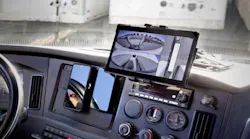
AI gives drivers the support to act sooner
From GPS trackers to driver logs, traditional telematics systems were built to monitor fleets. For decades, these systems have helped fleets understand what happened after an incident.
Modern physical AI systems are designed to actively reinforce safer behaviors in the moment.
Instead of simply documenting risky behavior after the fact, today’s systems can deliver real-time in-cab alerts, immediate driver feedback, and edge-based intelligence that helps drivers make safer decisions while they are still behind the wheel.
Importantly, the technology is not replacing drivers. It is helping them build safer habits, react faster in high-risk situations, and become more active participants in a fleet’s broader safety culture.
As Bath explained, “The AI was the game-changer. It takes the gray area out. The scoring is based on real behavior, not just violations, and it happens in real time.”
The sooner drivers receive feedback and coaching, the sooner they can address risky behaviors before they lead to an accident. That is the promise of edge AI: delivering intelligence in real time when it matters most, while giving people the insights they need to reinforce safer behavior over time.
The results show how far that combination can move a fleet toward zero. D.M. Bowman reduced preventable DOT crashes by 83%. Grand Island Express reduced rear-end collisions by 86%. NOVA Engineering reduced at-fault accidents by 58% in eight months. RPM Pizza reduced at-fault accidents by 66% in the first quarter of implementation.
Technology alone will never create safer fleets. But when paired with strong coaching cultures and leadership accountability, AI becomes a powerful force multiplier for safer driver behavior.
The industry needs a new safety standard
The industry should stop competing over who can claim the biggest percentage reduction and start competing over who is most committed to eliminating preventable accidents altogether.
Across the industry, leading fleets are already proving what becomes possible when strong coaching cultures are reinforced by AI-assisted operations, resulting in safer drivers, faster interventions, and meaningful reductions in preventable incidents.
Boyle Transportation offers perhaps the clearest example of what the quest for zero can look like in practice: “We haven’t had a preventable recordable accident since 2019 because our drivers are alert and bring their A-game,” Michael Lasko, AGM and VP, said.
Enough of the marketing slogans and feature wars. It’s time for a new operational philosophy that is based on responsible AI adoption, human-centered safety systems, and a culture of continuous improvement. Only by embracing that mindset can we drive forward this “quest for zero”—a quest worthy of the entire industry.
About the Author
 Heather Engen
As chief customer officer at Netradyne, Heather Engen works directly with fleet operators to unlock the full potential of AI-powered safety insights. Her experience from a career spent in leadership at multiple Fortune 500 technology companies, coupled with an MBA from UNC, has shaped her belief that real progress happens when you listen first and understand your customers' unique operational challenges. She's committed to helping fleets transform safety data into measurable ROI and building lasting partnerships that drive both safety culture and bottom-line results.