Cold chain under pressure: Navigating tariffs, trade, and tech
Key takeaways
- GCCA advocates for safe, secure, and efficient trade of temperature-controlled goods amid global geopolitical and trade disruptions.
- The organization focuses on strengthening infrastructure, promoting sustainability, and influencing policies like the USMCA and Farm Bill to support cold chain development.
- Policy developments such as the Food Traceability Rule and efforts to digitize inspection systems aim to improve safety, reduce costs, and streamline operations for cold chain businesses.
- Ongoing trade tensions, tariffs, and conflicts in regions like the Middle East create challenges like freight cost increases and equipment shortages, requiring adaptive strategies.
- GCCA collaborates with government agencies and industry stakeholders to enhance supply chain resilience, transparency, and technological innovation for future readiness.
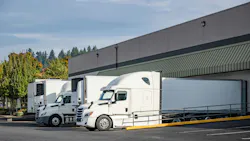
Geopolitical events and ongoing trade uncertainties have widespread implications for supply chains, including the storage and movement of temperature-controlled goods around the world. The Global Cold Chain Alliance (GCCA) champions temperature-controlled logistics businesses at this critical moment—as the food and logistics industries race to reduce vulnerabilities and build more resilient supply chains amid mounting uncertainty.
GCCA also actively advocates for cold chain operators across the U.S. policy landscape—tracking Congressional developments that may not make the headlines, but significantly shape how fresh and frozen food is stored, transported, and distributed.
Cold chain policy priorities impacting trucking and logistics fleets
In response to specialized domestic policy proposals and macro global events, GCCA is working with governments, authorities, and supply chain stakeholders on a clear advocacy strategy. “We’re focused on real-world solutions that move the needle for cold chain operators,” said Sara Stickler, GCCA president and CEO. “Recent years have made it clear how vital supply chain continuity is to the broader economy—and that has opened up real opportunities to shape policy, both here in the U.S. and around the world.”
And GCCA is uniquely positioned to lead the charge, leaders maintain.
“The first priority centers on safe and secure trade of temperature-controlled goods,” explained Shane Brennan, GCCA SVP for global policy, projects, and partnerships. “That encompasses global issues such as conflicts in the Middle East and Iran, as well as the specifics of national trade policy, compliance issues, product safety, and facility inspections. The second area of focus relates to the resilient infrastructure required for an effective and efficient cold chain, from business investment and taxation policy to civil crisis preparedness and technological innovation. Third, GCCA is advancing cold supply chain sustainability as a core 2026 priority: pushing for progress on food waste reduction, climate resilience, and resource scarcity through targeted policy engagement.”

Cold chain operators manage trade disruption and freight volatility
Advocating for safe and secure trade of temperature-controlled goods is a dynamic program, evolving in response to tariff changes and the Middle East conflict, which is generating multiple short- and medium-term impacts across the global shipping network, with significant freight cost increases, stranded and diverted container ships, and immediate trade disruption. Container imbalance is compounding the existing challenges of shortages of reefer equipment in export hubs. So GCCA will continue to work with authorities and supply chain stakeholders to get product and equipment moving as the situation evolves.
There is also continued uncertainty about the impacts of U.S. trade policy on international logistics, specifically tariff actions and retaliatory measures by trading partners. “Over the past 18 months, global food trade has seen increased volatility, disruption to plans and processes, delays, and raised costs,” said Adam Thocher, GCCA SVP for global market engagement. “February’s Supreme Court ruling introduced a new period of legal and commercial uncertainty. We’re joining forces with partners across U.S. agriculture to fight for low and zero tariffs on goods where American consumers are already feeling price pressures. This effort will continue as we navigate this summer’s U.S.-Mexico-Canada Trade Agreement [USMCA] review and work through the implications of the Supreme Court decision.”
For many major trading partners, initial reciprocal tariffs have been overtaken by negotiated agreements; and in November 2025, the administration reduced or eliminated tariffs on several food products to help address food inflation. “Operators should be aware that any changes in reciprocal tariffs are likely to lead to an increase in shipping activity as importers seek to complete product journeys before further tariff actions are taken,” Thocher added.
USMCA and global trade ties shaping refrigerated freight flows
The formal interim review of U.S. trading relationships with its two largest trading partners, Canada and Mexico, is due to be completed by July 1—the deadline for the formal USMCA review. More than $148 billion in agricultural goods moves between the three countries annually, all of which depends on reliable temperature-controlled storage, handling, and transportation.
GCCA is a partner of the Agricultural Coalition for USMCA, which is promoting its renewal. “Integrated North American supply chains depend on predictable, resilient cross-border movement,” said Lindsay Shelton-Gross, GCCA SVP for global communications. “A robust trade agreement is fundamental to enabling the safe, secure, and efficient movement of perishable food and other temperature-sensitive products across North America. Not only is continuity critical, but all sides should seize the opportunity to modernize its implementation, particularly in the Sanitary and Phytosanitary systems governing food safety and agricultural trade.”
In addition to minimizing disruption and seeking greater efficiency in established, primary trade channels, there are opportunities for cold chain operators in government policy that focus on developing additional trading relationships. GCCA continues to champion provisions in the new Farm Bill to foster U.S. government investment in cold chain market development in export markets for U.S. agriculture. These FRIDGE Act provisions have bipartisan support and are included in the proposed 2026 Farm Bill draft. GCCA’s work has resulted in improvements to the legislation, including an increase in funding to $1.5 million and narrowed eligibility criteria, better reflecting cold chain development work led by the Global Cold Chain Foundation.
 adobestock_359839321
 honor_foods_facility_2
Regulatory compliance pressures affecting cold chain trucking operations
Alongside the effects of trade-focused policies, there are several other areas of policy development that also may have significant implications for the day-to-day operations of temperature-controlled logistics businesses. The Food Traceability Rule (FSMA 204) establishes enhanced recordkeeping requirements for foods on the Food Traceability List, designed to help the FDA quickly identify products in the event of a public health threat. Cold storage and transportation operators connect producers, processors, and distributors at critical junctures where data like temperature, handling, and timing must be accurately recorded.
“The new requirements mean significant investment, training, and operational change for many businesses operating in the food industry,” Shelton-Gross said. “GCCA has been advocating for a practical approach to traceability that balances food safety objectives with the realities of supply chain operations. Last March, the FDA announced the extension of the compliance date from January 2026 to July 2028. It is important that during this time, businesses operating in the food supply chain are provided with the information, resources, and support needed to prepare for compliance.”
GCCA is a partner in the Food Industry FSMA 204 Collaboration, working together to share clear messaging and resources.
Digitization in cold chain logistics improving compliance and efficiency
A major frustration for temperature-controlled logistics operators, common across much of the globe, is the unnecessary time and cost burden of inefficient, often paper-based, and sometimes duplicative regulatory systems and processes. For example, U.S. warehouses encounter significant duplicative reinspection requirements, and GCCA is engaging with USDA and the Food Safety and Inspection Service to highlight this issue and explore ways to digitize inspections.
The most far-reaching example is the SPS control systems, which are based on highly technical, paper-heavy processes that create delays, cost money, and invite fraud. “Digitized systems deliver practical, workable reforms that help remove friction from global trade,” Brennan summarized. “The increased need for efficiency and resilience in trade systems is opening the potential for positive change. It is slow and complex, but progress is being made as governments around the world seek robust solutions that both strengthen oversight and support commerce.”
About the Author
 Lindsay Shelton-Gross
Lindsay Shelton-Gross
Lindsay Shelton-Gross is the senior vice president of global communications, marketing, and strategic initiatives for the Global Cold Chain Alliance. She leads internal, external, and executive communications, event marketing, and strategic industry stakeholder and media outreach. She can be reached at [email protected].