Math that works: ESSNA brings hydrogen blending to diesel TRUs
Key takeaways
- The H59-D system introduces small amounts of hydrogen during combustion, enhancing efficiency without engine knocking or overheating.
- ESSNA guarantees at least a 10% reduction in diesel consumption, with ongoing validation of emissions and maintenance benefits.
- The hydrogen supply is included in a flat-rate pricing model, making the solution economically viable for fleets.
- The system is designed for durability in challenging environments, automatically adjusting hydrogen injection based on operational demand.
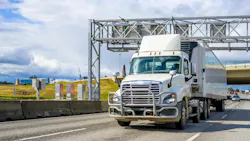
Hydrogen is cleaner than diesel. It’s also more expensive and harder to find, making widespread adoption of liquid hydrogen or hydrogen fuel cell-powered vehicles, or even diesel displacement engines, a tall order for most heavy-duty fleets. Simply put, the math doesn’t work. So, Energy Security Services North America (ESSNA) is taking a novel “hydrogen-as-a-service” approach that includes the hydrogen supply and no up-front equipment expenses.
Like a hot rodder injecting a big block with nitrous, ESSNA’s H59-D Autonomous hydrogen-diesel blending system introduces a small amount of hydrogen “accelerator” during the combustion process, facilitating cleaner, more efficient diesel consumption that not only reduces carbon intensity but also saves fleets money. And because the H59-D metering and control module doesn’t “displace” diesel with hydrogen, the system doesn’t cause engine knocking or overheating.
“How do you get the economics to work in a traditional diesel displacement program? You simply don’t,” Gareth Gregory, the company’s North American head, said. “That’s why we are utilizing hydrogen as an accelerator. That is what’s unique.”
Now ESSNA is introducing its hydrogen-diesel blending ecosystem for transport refrigeration units (TRUs) as a practical way for U.S. and Canadian reefer fleets to move toward zero-emissions operations while still providing reliable, budget-friendly performance—and guaranteed results.
“H59-D Autonomous gives operators a practical, low-risk way to substantially reduce diesel consumption and operating costs today while advancing decarbonization goals using existing assets,” Edgar La Pointe, ESSNA market development and H2 fleet manager, said. “This is particularly attractive for refrigerated transport fleets, where diesel consumption from both the tractor and the refrigeration unit directly impacts margin and emissions performance.”
Hydrogen adoption in trucking faces policy and incentive uncertainty
The politics surrounding zero-emission vehicles have shifted under the Trump administration, especially regarding battery-electric vehicle adoption timelines and subsidies. But ESSNA is based in Canada, where hydrogen-powered transportation is still moving forward. Bison Transport, Loblaw Companies, Walmart Canada, and Coldstar Solutions all started testing hydrogen fuel cell trucks in reefer operations in Canada over the last few years.
“We’ve been in hydrogen long enough to nail down the key value proposition we’re providing our clients,” Gregory said. “What’s dried up are the grants and incentives, which we weren’t party to anyway.”
He and La Pointe also believe the timing is right for new TRU technology. Reefer fleet managers trying to optimize operations amid a stubborn freight recession and soaring fuel prices still need a viable path to reducing emissions, and H59-D checks both boxes, allowing clients to consume less diesel and improve sustainability “off the balance sheet,” Gregory maintained.
“With the heavy-duty pilot projects, public transit, airports, and now refrigerated fleets, there is enough demand to keep us busy for a long time,” he asserted. “We see this as value-chain journey, and we believe a lot of these companies will slowly but surely transfer to hydrogen power. But it’s not a two-year program. It’s more like a 10- to 15-year program.”
To Gregory’s point, Volvo recently revealed it is now testing heavy trucks powered by hydrogen combustion engines and “high-pressure direct injection” technology in Europe. And ESSNA announced March 31 that “yet another North American fleet” operator has selected H59-D systems for its vehicles, which boast diverse engine capacities and applications.

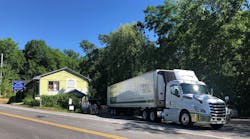
Hydrogen-diesel blending system targets verified fuel savings in refrigerated fleets
Mounted to existing equipment, H59-D modules leverage proprietary software to autonomously dispense hydrogen during the combustion process in a tightly controlled manner. “As hydrogen is introduced, it goes directly into the engine’s fuel intake, causing the fuel to burn more efficiently at any load,” La Pointe explained. “So, you’re not using a ton of hydrogen. We don’t need massive storage tanks on trucks, or anything like that. We simply provide a feedstock.”
ESSNA’s blending solution includes the high-purity hydrogen supply. The company also installs and maintains its H59-D systems with no capex expectation and promises immediate, measurable returns. “We guarantee at least a 10% reduction in diesel consumption,” La Pointe said. “It is quite a bit more than that, but we guarantee 10% so everybody understands this product works, and we stand behind it. Our diesel reductions are continuously validated through a reported baseline.”
Similar guarantees, including a reduction in carbon intensity, apply to truck and reefer setups, which are separately installed, and differ slightly due to the power required, Gregory added. “The reefer unit’s operational characteristics are different, so the numbers look different, and energy management is more intricate, but the benefits remain the same,” he said.
Cost-effective convenience is a big one. ESSNA customers pay a flat rate based on hydrogen consumed per usage period. “That’s the only charge,” La Pointe said. “So, it becomes economically viable.”
Hydrogen-assisted diesel systems aim to reduce maintenance and emissions
Intuitively, burning diesel more efficiently also comes with benefits in engine and aftertreatment system maintenance—and emissions sensors and DPF filters are two of the biggest pain points in trucking today. “We know H59-D reduces maintenance. There’s no doubt about it,” Gregory maintained. “But we want to back that up scientifically, so we still need to run many millions of miles with our clients to understand the extent of those benefits.”
As part of its strategy to save fleets money, ESSNA, which assumes 100% of the performance risk, has not yet pursued third-party validation, but that’s in the company’s plan, Gregory shared, and testimonials thus far are limited because early adopters are keen to protect their advantage. “They’re winning contracts because they have a competitive edge in their sector,” he said. Instead, ESSNA allows clients to conduct baseline tests so they’re not going into full deployment “blindly,” ensuring results across a diverse range of applications, including refrigerated transportation.
“Built for real-world industrial conditions, the system automatically adjusts hydrogen injection based on operating demand and is purpose-designed for variable duty cycles, sustained loads, vibration, dust, remote-site environments, and continuous-duty transport applications,” La Pointe concluded.
“For trucking fleets, this includes diesel-powered TRUs and reefer systems, where H59-D can help lower diesel use during long-haul runs, reduce idle-related emissions, and improve the economics of temperature-controlled freight operations.”
About the Author
 Jason McDaniel
Jason McDaniel
Jason McDaniel, based in the Houston TX area, has nearly 20 years of experience as a journalist. He spent 15 writing and editing for daily newspapers, including the Houston Chronicle, and began covering the commercial vehicle industry in 2018. He was named editor of Bulk Transporter and Refrigerated Transporter magazines in July 2020.