Routing reimagined: Honor Foods upgrades planning efficiency
Key takeaways
- Honor Foods reduced routing time by 20% and cut unnecessary costs with data-driven route optimization.
- The integration of Appian with Honor Foods' WMS provided real-time visibility, reducing delays and customer service issues.
- Appian’s flexibility allows for quick adjustments to routes, accommodating last-minute orders and unexpected changes efficiently.
- The connected ecosystem of Trimble’s solutions can consolidate transportation management, dispatching, mapping, and fleet maintenance, streamlining workflows and increasing purchasing power.

The long freight recession forced many fleet operators to figure out how to “do more with less” in the last few years. And when the situation was finally improving, the war in Iran sent fuel prices spiking, extending the need for enhanced operational efficiency—even for the most resilient trucking companies that have continued to expand amid so much uncertainty.
In either case, today’s transportation technology can help.
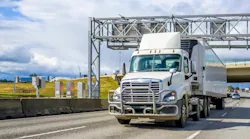
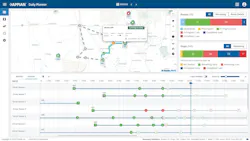
Honor Foods, a Pennsylvania-based redistributor that last year opened a new facility in Kissimmee, Florida, leveraged Trimble’s Appian Daily Planner to optimize the routing of its refrigerated trucks in Philadelphia by replacing manual processes with a dynamic, data-driven system that automates routing, reducing planning time and boosting equipment utilization.
“[Appian] has been a godsend,” Steven Torres, Honor Foods senior transportation manager, said in a Trimble case study. “It helps us move our trucks. It reduces man-hours in the office and wasted driver hours. It’s taking a lot less time for my dispatchers to do their routing.”
According to the new study, Honor Foods reduced routing time by 20%, slashed empty miles and “unnecessary” costs, and gained real-time visibility across dispatching, warehousing, and delivery—reducing delays and customer service issues—by integrating the Appian planner with its in-house warehouse management system (WMS). And Eric Reitmeier, Trimble regional sales manager, insists foodservice fleets can realize time savings up to 75% with Appian while also reducing the assets required to do the work by up to 25%.
“That one is really big, especially with the current state of the market and looming threat of recession,” Reitmeier told Refrigerated Transporter. “People are trying to do more with less—and Trimble has the perfect tool.”
Route optimization supports fleet growth and efficiency
Honor Foods, a Burris Logistics company founded in 1949, and its subsidiary brands, R.W. Zant and Sunning Morning Foods, work with more than 800 suppliers of fresh, frozen, dry, and dairy products, and stock more than 7,000 items, including their own in-house staples. The food supply chain facilitator’s facilities in California, Florida, and Pennsylvania are a critical link between producers and foodservice distributors—and its private fleet makes that possible.
Managing those trucks, however, is increasingly complicated.
Honor Foods is growing, so its footprint is spreading, orders are surging, and logistical puzzles are compounding—and Google Maps, sticky notes, and institutional knowledge couldn’t keep pace.
“On an average day, we are routing over 100 individual orders, right up until cutoff, and that could easily exceed 100 stops,” Mark Williams, Honor Foods IT support analyst, said. Honor Foods tapped Trimble to scale its dispatching capabilities and piloted Appian in Philadelphia with 50 trucks that run the traffic-heavy corridor between New Jersey, Pennsylvania, and New York.
The results, Honor Foods leaders maintain, were transformational. “With Appian Daily Planner, my dispatchers can route all our trucks across the country,” Torres shared. “We have different menus for different vehicle types and different regions, and it helps divvy up a big, congested map while allowing us to have a visual overview of everything across the country.”
Now the company is planning to deploy the system to all locations.
“We automate the process with decision-making assists,” Reitmeier said. “So, we’re not trying to replace people. Appian is taking what they know and helping build out the most cost-effective routes using our algorithms and routing tools—while not discounting historical knowledge.”
 adobestock_359839321
Connected fleet systems improve routing flexibility
In addition to improving scalability and boosting employee morale, Appian’s routing flexibility is enabling Honor Foods to easily accommodate last-minute orders and unexpected changes. “Routers are going in and out of Appian Daily Planner as orders flow in, constantly routing and re-routing, and it’s really helped us manage that process,” Williams said. The system also boosts service by leveraging customer time windows as “hard-coded rules,” Reitmeier said.
“When Appian is building routes, it’s never going to produce one that violates those windows,” he explained. “And there are different ways to do it. You can add flex periods, you can include multiple windows, and you’re going to get better service and higher SLAs [service level agreements].”
Fleets also can use Appian to weigh route optimization vs. driver satisfaction when formulating routes, and mobile tools “untether” dispatchers from their desks, allowing them to adjust orders in the yard or warehouse. “They can use our AI tools to query routes or ask for follow-up suggestions and details,” Reitmeier said. “So, it’s a great way to unplug and still be effective.”
Honor Foods turned to Trimble in part because Burris already was already using TMW.Suite, highlighting another Appian advantage—the system’s connected ecosystem capabilities that multiply utility. “We have the entire breadth and depth of our tech stack across transportation management, dispatching, mapping, mobile reporting, data intelligence, and fleet maintenance,” Reitmeier said. “So, you can consolidate with one vendor, realize the increased purchasing power, and also boost synergy and streamline workflows.”

Technology integration helps fleets scale operations
Trimble began working with Honor Foods in 2023, first implementing Appian, then validating and fine-tuning the system through the pilot, Reitmeier relayed.
“We wanted them to feel comfortable, especially coming from a manual process,” he said. “It was their first time using this kind of software in-house, and change management and acceptance are big hurdles for any company adopting new technology, so we wanted to give them a white-glove experience.”
The technology company’s professional services team helps companies manage the change in a six-phase approach that includes initial discovery, deep dives into operational nuances, configuration, customization, and user training. They also give fleets multiple options for enterprise resource planning (ERP), transportation management system (TMS), and WMS integrations, including full web services with APIs or automated file imports, Reitmeier said.
And fleets continue to benefit from 24/7 technical support long after implementation.
“We’re super excited to see Honor Foods grow,” Reitmeier concluded. “They already expanded outside the Philadelphia pilot market to Florida, and they’re planning to roll this out in California as well.
“So, Appian continues to evolve with them—and it’s really helping.”
About the Author
 Jason McDaniel
Jason McDaniel
Jason McDaniel, based in the Houston TX area, has nearly 20 years of experience as a journalist. He spent 15 writing and editing for daily newspapers, including the Houston Chronicle, and began covering the commercial vehicle industry in 2018. He was named editor of Bulk Transporter and Refrigerated Transporter magazines in July 2020.