California signs bills affecting cold storage facility requirements
Key takeaways
- California signed two bills that change requirements for certain large cold storage facilities.
- SB 716 allows fines of up to $50,000 for certain violations tied to declared disasters.
- GCCA says the measures could add costs and regulatory requirements for cold-chain businesses.
California Governor Gavin Newsom recently signed AB 817 and SB 716, two measures that establish new requirements and modify local enforcement penalties involving certain large cold storage facilities and other specified nonresidential structures.
SB 716 increases fines for violations of local ordinances involving specified nonresidential structures of 20,000 sq. ft. or more when the violations threaten health and safety. For qualifying violations that result in a governor-declared state of emergency or federal disaster declaration, fines may reach $50,000 per violation.
The enhanced penalties initially apply to qualifying violations in Los Angeles County and expand to qualifying areas elsewhere in California beginning July 1, 2028.
AB 817 establishes contingency-fund requirements for certain large cold storage facilities based on community needs. Until July 1, 2028, the requirement applies to facilities within the Boyle Heights Community Plan boundaries in Los Angeles. Beginning July 1, 2028, the requirement applies statewide.
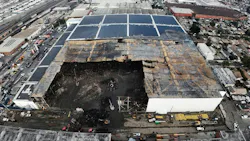
The legislation follows the June 17 fire at a nearly 500,000-sq.-ft. cold storage facility in Boyle Heights. The fire burned for eight days and was followed by cleanup and public health challenges.
“Boyle Heights showed us the lasting impact a major facility emergency can have on a community,” Newsom said. “These laws strengthen the tools, resources, and accountability needed to protect residents and help communities respond when emergencies happen.”
GCCA raises concerns about legislation
The Global Cold Chain Alliance (GCCA) opposed AB 817 and SB 716 and expressed disappointment following their signing. GCCA said the laws could increase financial and regulatory costs for businesses across the food and pharmaceutical cold chain. The organization said it supports stronger emergency preparedness but believes the legislation does not provide the resources communities need following industrial incidents.
“We’re disappointed that this legislation moved forward in its current form, because it doesn’t deliver what communities actually need in the wake of the Boyle Heights fire, and adds real costs to an industry that keeps food and medicine available and safe for millions of Californians,” said Sara Stickler, president and CEO of GCCA.
“However, we look forward to sitting down with Assemblymember Gonzalez, other lawmakers, and community stakeholders in the next legislative session to build a policy that genuinely strengthens emergency preparedness without pricing responsible businesses out of California. We appreciate Assemblymember Gonzalez’s commitment to working with all parties to refine a policy that delivers meaningful safety and support to communities, while preserving and sustaining the state’s food supply resiliency. Our members are ready to be part of that solution.”
What this means for the trucking industry
The legislation creates additional requirements and potential financial exposure for operators of qualifying large cold storage facilities. Fleets and transportation companies serving these facilities may need to account for changes in facility requirements, local enforcement, and emergency-related costs as the measures take effect.
For companies moving food and pharmaceutical products through California's cold chain, the potential cost and operational effects identified by GCCA could extend beyond facility operators to other businesses involved in the supply chain. The legislation's phased implementation also gives companies time to evaluate how the requirements apply to their operations before the statewide provisions take effect in 2028.