Key takeaways
- Roadcheck shows brake violations remain top out-of-service issue, requiring year-round maintenance focus.
- Hours-of-service and documentation gaps drive many violations, making driver training and readiness critical.
- Compliance tech and ISS data help fleets identify risks early and reduce roadside inspection exposure.
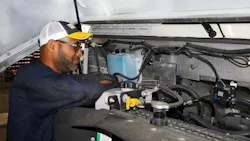
International Roadcheck returns this spring, giving fleet owners a narrow window to prepare for the industry’s most comprehensive three-day compliance check—and avoid costly service disruptions.
For Ric Wilcher, director of safety at Transervice Logistics, the best way for carriers to prepare for the annual safety blitz is to treat it as a comprehensive systems test, not a once-a-year inspection event.
“Fleets that perform well start preparing months in advance by tightening execution across maintenance, driver behavior, and accountability,” he said, adding that clean paperwork “sets the tone” for how smoothly inspections unfold. “Fleets should audit documentation readiness well ahead of Roadcheck week.”
From May 12-14, inspectors across North America will take part in the annual Commercial Vehicle Safety Alliance (CVSA) event, conducting thousands of inspections that can place noncompliant vehicles and drivers out of service. Random inspections focus on vehicle condition, driver compliance, and proper cargo securement.
Although commercial vehicle operators are some of the safest drivers on the road, according to Jeremy Disbrow, roadside inspection specialist at CVSA, there’s always room for improvement when it comes to safety.
“Many issues [identified] during roadside inspections can be resolved by simply being prepared prior to the inspection,” he told FleetOwner. This includes ensuring drivers know where to find their documents and how to operate their electronic logging device (ELD), understand what to look for during a pre-trip inspection, and—most importantly—correct defects quickly when they are found.
Brake violations drive most Roadcheck OOS penalties
Each year, brake violations consistently rank at the top of the list for vehicle out-of-service violations, accounting for 37% of all violations, Disbrow said.
To avoid penalties, he recommends inspecting braking systems regularly to ensure proper adjustment and performance throughout the year.
Wilcher echoed that sentiment, with one caveat.
“Many fleets assume that a completed pre-trip equals compliance,” he said. But “Roadcheck data continues to show that vehicles are routinely placed out of service for brake-related issues that should have been identified before departure. That gap points to an understanding issue, not a policy issue.”
Fleets can close this gap, Wilcher continued, “by shifting from checklist compliance to hands-on validation,” which includes refresher training on audible air leaks, excessive slack, worn components, and visible brake defects.
“Some fleets also reinforce accountability through logged pre-trip confirmations, field validations, or supervisor ride-alongs to verify inspection quality,” he said. “When drivers understand what they are checking and why it matters, roadside violations decrease, and inspection confidence improves.”
Cargo securement, lighting, tire issues remain key Roadcheck risks
While brake violations remain the most common problem flagged during Roadcheck, they’re far from the only risk area.
Other causes of concern include cargo securement, lighting, and tire violations, which collectively accounted for 45% of out-of-service defects discovered during last year’s event, Disbrow added.
During Roadcheck 2025, 42% of the driver out-of-service violations stemmed from Hours-of-Service violations. Disbrow said that ensuring drivers are mindful of the 11- and 14-hour rules and avoiding pressure on drivers to exceed limits reduces violations and fatigue—a win-win.
“Drivers need to understand that Roadcheck is not a special event,” Wilcher said. “It is a live assessment of everyday habits.”

English proficiency enforcement rises in roadside inspections
Recent enforcement actions by the Trump administration’s U.S. Department of Transportation (USDOT) are placing fleets under greater scrutiny, particularly when it comes to English language requirements. During Operation SafeDRIVE—a three-day DOT event held in January—704 drivers were placed out of service, including nearly 500 for English proficiency violations.
“There’s a greater emphasis on English language proficiency,” Rob Abbott, VP of corporate strategy at Fleetworthy, said, adding that fleets would be wise to ensure their drivers are compliant with Federal Motor Carrier Safety Administration (FMCSA) guidelines, which require commercial vehicle operators to be able to converse with the public and officials, read highway signs, and complete reports.
To do that, he recommends looking at publicly available FMCSA data and employing computer-based learning systems to close knowledge gaps ahead of inspections.
ISS scores don’t guarantee Roadcheck inspections for fleets
One of the biggest misconceptions carriers might have about Roadcheck is that fleets with Inspection Selection System (ISS) scores above 75 will always be pulled in.
In reality, inspections are far less predictable and depend on state resources. In some regions, Abbott said, inspectors might only be able to stop one out of every four or five eligible vehicles—meaning even high-risk fleets aren’t inspected every time they pass through a weigh station.
Technology plays a central role in how these decisions are made.
“Many fleets subscribe to bypass systems that allow them to skip weigh stations,” Abbott explained. As trucks approach, key data—such as USDOT numbers—are transmitted, allowing inspectors to quickly analyze safety records and decide which vehicles to pull in based on real-time conditions and available resources. These systems also notify drivers in the cab when they’re cleared to continue, improving efficiency on the road.
“Something to consider is that, during Roadcheck, inspections don’t just happen at fixed locations but also take place at mobile or pop-up sites,” Abbott said. “For example, state police might set up an inspection station in a rest area. A bypass provider can alert you where those pop-ups exist, and drivers can obtain bypasses if they qualify.”
While bypass technology can streamline operations, it also reinforces the need for fleet owners to prioritize continuous compliance instead of just focusing on it once a year.
Fleet tech improves Roadcheck readiness and ISS tracking
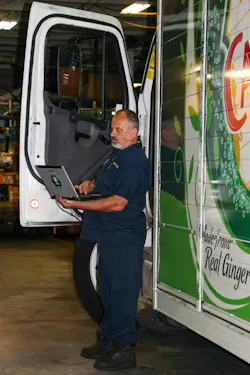
As regulations evolve, fleets can no longer rely on spreadsheets or basic homegrown systems to manage compliance. Modern, purpose-built tools give fleet owners the visibility and control needed to adapt and stay ahead.
While higher ISS scores don’t guarantee a roadside inspection, knowing your fleet’s score—and understanding the data behind it—allows managers to detect trends and mitigate potential risks before inspectors flag them.
“Getting to that data is time-consuming,” Abbott said. “There are services that grab the data for you, summarize it, and help you detect patterns. You can action that data and have better results at roadside inspections,” which ultimately helps improve ISS scores proactively.
Proof of annual inspections is another cause for concern. Decals can become missing or unreadable after something as simple as a pressure wash, and inspectors still expect documented evidence.
Modern fleet management systems can track inspection schedules and alert managers when vehicles are due. They also store digital copies of inspection reports, which drivers can pull up anytime to verify compliance.
Fleets relying on “very basic tools” don’t have the same luxury.
“Homegrown tools don’t have the level of sophistication needed to adapt to an ever-changing regulatory environment,” Abbott said. “As regulations and the enforcement environment become increasingly complex, fleet systems have to keep pace with them.”
Software can also help fleet owners identify patterns of falsification, which may indicate a particular driver is making errors, faking logs, or there’s a system issue.
“If you find an error here or there, that’s reasonable,” Abbott said, adding that software helps fleet owners detect and correct such issues before inspectors see them. “Patterns of violations speak to problems. If someone is manipulating data to drive longer, then that driver can be taken out of service for 10 hours. It has a real impact on operations and your safety record.”
Fleet systems can also deliver in-cab notifications that help drivers understand the top enforcement priorities in each region. For example, if Texas is emphasizing wiper violations more than Kansas, drivers can receive alerts when they cross state lines, prompting them to check their wiper blades as soon as possible.
While purpose-built technology helps fleets avoid citations, these systems also support safer, more efficient operations and confident drivers—benefits that extend well past Roadcheck.
Roadcheck prep improves safety ratings, uptime, and insurance outcomes
For fleets and their driver owners, International Roadcheck isn’t just a yearly event to prepare for and then forget about. Being inspected when you’re prepared—whenever it happens—can be a positive experience.
“Defect-free inspections improve the motor carrier’s safety rating, which in turn can lower insurance rates and increase positive relationships with brokers,” Disbrow said. “Roadside inspections can also build positive relationships between law enforcement and the transportation industry, which must work together to promote highway safety.”
Preparing for Roadcheck also helps protect uptime and operational continuity.
“Every out-of-service event triggers delivery delays, customer dissatisfaction, and expensive recovery actions,” Wilcher said. “Fleets that prepare intentionally experience fewer disruptions and more predictable operations.”
The way Wilcher sees it, safety performance is more than a compliance metric in today’s environment. By proactively preparing for Roadcheck, fleet owners can reinforce safety culture and create a true competitive advantage.
“When leadership treats Roadcheck as a reflection of everyday standards, it sends a clear message that expectations are consistent and non-seasonal,” he said. “That consistency builds trust, accountability, and pride across the organization.”
About the Author

Justin Reynolds
Contributor
Justin Reynolds is a B2B technology writer and editor with 20 years of experience telling stories about innovation and its impact on the way we work and live. He started his career in journalism, spent two years at a B2B tech agency, and has worked as a full-time freelancer since 2015. He lives in Connecticut.