How to develop driver buy-in for in-cab camera adoption
Key takeaways
- Dash cameras improve safety, accountability, and insurance claims processing for fleet drivers.
- Positive reinforcement and understanding driver motivations are key to gaining driver buy-in for camera programs.
- Recognizing good driving behaviors and gamifying performance challenges encourage driver participation.
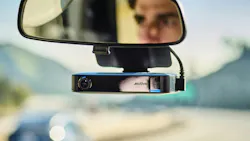
No one likes a manager looking over their shoulder throughout the workday. But many fleets now want that for their drivers through dash cameras, and adoption is accelerating.
The reason behind these in-cab cameras—which can be road-facing, in-cab-facing, or both—is directly tied to safety and accountability.
In-cab cameras provide multiple fleet benefits. They help fleet managers get a pulse on their drivers’ skills and adherence to driving policies. Knowing how their drivers drive helps them improve their fleet driving program and their coaching methods. They also help with insurance claims and premiums. While it sounds great, not all drivers are interested.
If drivers feel they’re being watched by a “Big Brother” who’s waiting on them to make a mistake, fleet managers might have a hard time getting their drivers excited about in-cab cameras.
Getting drivers on board
Rodney Fetters, fleet director at Spatco Energy Solutions, found that taking a positive approach to dashcams, rather than a punitive one, was most beneficial for his fleet. He uses the analogy of horse racing. “When you go to the whip, the race is over,” he said during a fireside chat at Motive’s user conference in May. In the same way, when you place a dash cam in the cab of a driver who’s already had an accident or two, their performance will slip.
“That’s punitive,” Fetters said. “It’s like, ’OK, now you’re going to watch me all the time, because I messed up?’”
It was also important for Fetters and his team to understand performance from their drivers’ perspective and what being a safe driver “means” to them, or essentially, why did they even “show up to work today?”
“You’ve got to find … what means the most to [drivers], and then accentuate that,” Fetters explained. “We want you to wear your seat belt because there’s someone at home waiting on you to get home tonight; and we want you to go home better than what you showed up. … It's not always the whip, it's not always the stick, it's not really always the carrot, but it's ‘What do they care about the most?’ And, then how do you make them believe that in their day-to-day?”
When drivers understand that safe driving impacts not only their company but also themselves, and whether they get to see their family at night, they can then use the footage and information from these dashcams to improve their own skill set.
But benefits go beyond driver safety.
 Emily Parsons speaks at Motive
 Motive Vision 2026
Drivers benefit from dash cameras via accident exoneration
One benefit for drivers is having proof that exonerates them in an accident, which has been a key factor in dashcam driver buy-in, according to Nihar Gupta, Motive VP of product management.
Picture it: Your driver is trucking along the highway, minding all road rules and driving the speed limit. Out of nowhere, a sedan cuts off your truck driver. While an accident could not be avoided, your driver was aware of their surroundings and reacted quickly, resulting in an accident that was much less harmful than it could have been.
While the accident was the fault of the sedan, the driver of the sedan blames your truck driver—after all, it was the sedan that was hit from behind.
Without dash cameras, the fleet company has no way to prove the sedan was at fault.
However, with a dash camera, drivers can immediately show police footage, proving they were following guidelines and laws. Cab-facing cameras can take that proof even further, providing footage of the truck driver’s quick thinking that helped decrease the severity of the crash, and proving that the trucker was not distracted.
“Once [drivers] start to see the benefit from exoneration, you generally see a lot of very willing driver participants in the program,” Gupta told FleetOwner. “Those types of stories go viral, and … drivers talk, and so that’s also where we see the adoption resistance going down significantly.”
Fetter told a story of one of his drivers who was involved in a five-car incident. Within three days, Fetter was notified that his company and the driver involved were being sued. He was quickly able to produce video evidence from the driver’s dashcam that proved Fetter’s driver was not at fault. This happened two weeks after this driver, “who was the loudest voice against [dash cameras] being put in his vehicle,” had cameras installed in his truck. As a single dad with a lot to lose in a lawsuit, the driver changed his tune after one incident.
Ways to get your drivers to buy into dash cameras
Driver buy-in isn’t always immediate with dash cameras. Fleets interested in employing dash cameras, or those looking to increase driver buy-in, could consider ideas from Motive and Fetter.
Gupta said it’s important to first look at dash cameras in your fleet through a holistic lens. “Let’s holistically understand what the drivers are doing,” Gupta said. Then, “coach them holistically on those things.”
This holistic view means taking a broad look at the driver’s behaviors and including the context of the event they triggered while driving. For instance, did they perform a harsh brake because they weren’t attentive, or did they perform a harsh brake because they were practicing defensive driving?
If the harsh brake was a result of defensive driving and a display of great situational awareness, then the driver should be recognized for their exemplary driving.
“Always lead with what [drivers] are doing well,” Gupta said.
Fetter gamifies his fleet driver performances with challenges to reward his fleet’s best drivers. One such challenge was a “harsh braking challenge,” using Motive AI Dashcam Plus. Fetter has configured these cameras to alert drivers when they experience a harsh braking event audibly. During this challenge, Fetter told his drivers not to “let the camera talk” to them. “Do what you’ve got to do so that [the camera] doesn’t tell you ‘harsh brake detected.’”
This challenge tapped into the drivers’ competitive sides, and at the end of the month, every driver exhibited a perfect score.
“It was neat to get to them in different ways,” Fetter said. “I was so proud to be able to go and share [their results] with them and do more than just a dang pizza party—that wins no one over.”
Finally, fleet managers must do what works for their fleet and their application. If a fleet can meet its driver performance goals with only a forward-facing camera, then a cab-facing camera may be overkill. Additionally, if a fleet manager doesn’t have time to sift through hours of dashcam footage, an AI-equipped camera system may be the way to go. This enables AI to crawl through hours of footage and automatically identify high-risk events that require fleet manager involvement. Then again, another fleet might need an entirely different approach.
One Motive customer employs union drivers with strict regulations on driver privacy. While the fleet can’t use camera footage to detect driver distractions, it can use Motive AI Dashcam Plus’s AI to detect distractions inside the cab. This ensures driver privacy and that fleet management is doing its due diligence to improve fleet performance.
Cameras can have a big impact on coaching and risk reduction within a fleet. But one of the first hurdles is getting a driver to become comfortable with the technology. It’s up to the fleet managers to move from a punitive, Big Brother-style surveillance to a positive approach that rewards drivers and ensures a safer fleet.
About the Author
 Jade Brasher
Jade Brasher
Executive Editor Jade Brasher has covered vocational trucking and fleets since 2018. A graduate of The University of Alabama with a degree in journalism, Jade enjoys telling stories about the people behind the wheel and the intricate processes of the ever-evolving trucking industry.