Volvo Trucks releases pet safety guide to help protect the pets of truck drivers
Key takeaways
- More than 60% of commercial truck drivers are pet owners, and nearly 40% bring pets on the road.
- VTNA's new guide covers pet restraints, emergency preparation, weather safety, first aid, and overnight stops.
- Volvo VNL anchor points were found compatible with Center for Pet Safety Certified harnesses and carriers.
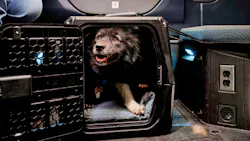
Volvo Trucks North America (VTNA) recently released new safety recommendations to help drivers protect pets traveling in truck cabs. The guidance was developed with the Center for Pet Safety and covers pet restraint, emergency preparedness, weather safety, first aid, and overnight stops.
VTNA developed the guidance for drivers traveling with dogs or cats, including those taking a pet on the road for the first time and experienced pet owners.
The free guide recommends that pets be properly restrained while the truck is moving and provides guidance on selecting and using crash-tested harnesses and carriers.
The guidance follows an evaluation conducted late last year at the Volvo Customer Center in Dublin, Virginia. Center for Pet Safety experts examined the Volvo VNL from a pet safety perspective, including its anchor points, restraint options, and climate control. The experts also evaluated dogs secured in Center for Pet Safety-approved harnesses and carriers on the test track to assess how the systems performed in real driving conditions.
The evaluation found that the Volvo VNL’s strength-tested anchor points are compatible with Center for Pet Safety-certified harnesses and carriers.
“Professional drivers spend more hours behind the wheel than almost anyone, and for many of them, their pet is part of that daily routine,” Lindsey Wolko, founder and CEO of the Center for Pet Safety, said. “The new guide gives them real, practical answers, from picking a harness or crate that actually protects in a crash to knowing what to do if something goes wrong.”
What this means for the trucking industry
For truck drivers who travel with pets, the guidance provides a practical framework for addressing an often-overlooked aspect of cab safety. Proper restraint and emergency preparation can help drivers better protect their animals without adding complexity to their daily routines.