Beyond the hype: Real-world hurdles of autonomous trucking
Key takeaways
- Implementing autonomous trucks demands new maintenance protocols, integration with dispatch systems, and extensive inspections.
- Public acceptance remains a challenge, especially in the event of accidents, which could impact industry reputation and regulatory progress.
- High costs for equipment, infrastructure, and specialized staff pose significant barriers for fleet operators considering autonomous technology.
This is the second part of two articles on the benefits and challenges facing autonomous trucks. Part one is available here.
Safer, more efficient, easy to expedite—while the upside is exciting, autonomous trucking brings countless (and often expensive) operational questions for fleets.
Carriers that could embrace driverless hauls face challenges in integration, maintenance, public acceptance, and infrastructure.
Integration for normal trucking operations
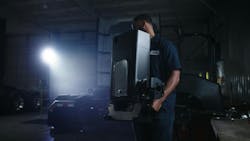
Implementing any new technology brings a stampede of new questions about particulars. Adding autonomy to a truck fleet requires a carrier to find new approaches to everyday minutiae, especially those concerning maintenance. Carriers will need to be ready to build the tech into their operations, as PlusAI's chief operating officer Shawn Kerrigan explained.
“These trucks do have some new technology components that need to be maintained,” Kerrigan told FleetOwner. “The challenge is in building the tech into their operations: There are more extensive pre- and post-trip inspections that you’ll need to do on the vehicles. There is some work to then integrate them into dispatch systems, the terminals, the maintenance workflows.”
“The challenges ultimately come down to usability,” Kodiak AI’s founder and CEO Don Burnette said. “Usability ultimately determines the efficiency for our customers and for those fleets. If we just hand them a self-driving truck and they don’t really know how to use it, or we don’t provide them adequate tools for using it efficiently, then it can actually be a negative on their business. … It’s the boots-on-the-ground folks who have to actually physically interact with these trucks on a day-in, day-out basis. If they aren’t given the right tools, it can become frustrating. You can add friction.”
More pressure on technicians
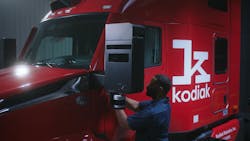
Though self-driving might resolve some driver shortage concerns, the same cannot be said for a technician shortage. Orchestrating sensors, computation, and drive-by-wire, autonomous trucks are necessarily more complex than standard trucks. An autonomous fleet would ask even more of its technicians, during a time when “fleets and dealerships and others have a hard enough time getting mechanics for diesel engines,” Andrew Culhane, chief commercial officer for Torc Robotics, said.
Defending the safety case
Safety may be a benefit of autonomous trucks, but the technology developers still need to work hard to prove the safety case of autonomous vehicles. That safety case is not guaranteed.
People are generally wary of autonomous drivers. A recent survey in Sustainability Analytics and Modeling found that most respondents are not in favor of autonomous truck adoption. Normalizing the technology is an important step for broader regulatory acceptance.
An autonomous truck will, one day, be involved in a fatal accident—it’s all but guaranteed. A human driver today can perform their job flawlessly and still find themselves in that same unfortunate situation. Autonomous drivers might be broadly safer than humans, but they still encounter errors: The TuSimple truck that swerved into the Interstate 10 concrete barrier in 2022 was harmless only by chance.
An accident with a self-driving truck would damage public acceptance, as Dean Bushey, director of programs for the North American Council for Freight Efficiency (NACFE), said:
“If there is an accident with an autonomous truck, much like we had with autonomous airplanes, it’s going to be big news. I don’t think society is ready for that. It is going to be hammered,” Bushey said. “If there is something that was caused by a computer that caused a human death, it’s going to set the industry back.”
Intense capital requirements
Maintenance and operational integrations are questions that a carrier would need to solve before integrating autonomous vehicles, but location infrastructure is a more expensive hurdle.
Autonomous operation terminals are incentivized to centralize operations that would normally use human intervention, such as fueling, inspections, and loading. Also called hubs or truckports, Bushey speculated that these terminals might find significant convenience in being co-located with truck stops.
“You’re going to need experts to load and unload. You’re going to need experts to maintain that equipment. You’re going to need refueling equipment. You’re going to need dispatch equipment,” Bushey said. “It’s going to be an active area. Well, that kind of sounds like a truck stop to me.
“I think initially you’re going to see land adjacent to existing truck stops, where they develop out some of this technology,” he continued. “The fueling infrastructure is there, the electric infrastructure is there. People are going to need a place to eat; well, that’s there at a truck stop.”
Truckstop or aerodrome?
Terminals for fueling and maintenance, serving a constant coming-and-going of cross-country vehicles—that sounds a lot like an airport. Dean Bushey, director of programs for NACFE, previously served as a pilot for several years and made a direct comparison between autonomous trucking and aviation.
“I think that’s what it looks like, kind of like the early days of aviation,” Bushey said. “All that infrastructure you use to transport people and goods all over the nation in the aviation world—well, that needs to happen in the trucking world for autonomous trucking. You’re going to need fueling infrastructure, you’re going to need dispatch, and you’re going to need control. All that stuff needs to happen.”
In fact, many autonomous developers made aviation analogies when discussing autonomous trucking with FleetOwner. Self-driving trucks have similar uptime and safety expectations as those of aircraft.
Andrew Culhane, chief commercial officer for Torc Robotics, described autonomous hubs as “airport-style massive launch and landing zones.” Xiaodi Hou, founder and CEO of Bot Auto, said the company approached its validation runs “as a kind of test flight of a new aircraft.”
Moritz Rittstieg, partner at McKinsey & Company, explained the company’s perspective on the state of autonomous trucking to industry journalists in January. The massive capital needed for autonomy is a hurdle.
“The real question is, can the economics be good enough for fleets to take the risk? Somebody has to put up the money,” Rittstieg said. “The economics need to be good enough for someone to take the risk for this to really scale. … With the tech upcharge and so on, you’ll get a benefit by taking the driver out—but it’s not going to be that significant.”
So far, autonomous developers—with key partnerships—have been the leaders behind hub infrastructure development.
Kodiak in August 2022 partnered with Pilot Company to augment its travel center network with autonomous truckports. The partners’ first hub opened in Georgia a year later. Kodiak in 2024 also opened a truckport co-located with Ryder’s Houston, Texas, maintenance facility. Torc launched its first hub in May 2025. Aurora in 2025 expanded its terminal network to Phoenix, Arizona. PlusAI is running autonomous fleet trials out of International Motors’ autonomous hub in San Antonio, Texas.
The real cost of running an autonomous fleet would be steep—more expensive than a simple upfit. In addition to traditional operating expenses, an autonomous operation would need to eat the costs for:
- Automotive-grade sensors and drive-by-wire technology
- Intense computation during a global memory supply shortage
- Specialized maintenance staff
- Terminal infrastructure overhead
"If I’m a trucking fleet, how do I get involved with autonomous trucks? Well, they’re expensive,” Bushey said. “All that equipment on board is going to be very expensive. I don’t have the infrastructure to support it. There are no autonomous hubs. … The cost upfront is going to be very big.”
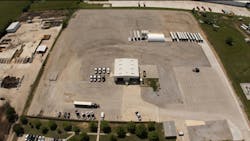
One group has already made many of the necessary investments in equipment, staff, and terminals: The first phases of autonomous operations may be offered by the autonomous truck developers themselves.
“I think you’re going to see a lot of companies come on and do transportation-as-a-service: ‘You contract with us; we use autonomous vehicles. You don’t have to worry about training anybody, and you don’t have to worry about buying the vehicles. We’ll just take that load.’ That will happen over the next three to five years,” Bushey said.
That’s the aim of Bot Auto, whose customers are shippers and 3PLs. The company has been working with J.B. Hunt, door manufacturer Steves & Sons, and other partners to haul freight from Houston to San Antonio and Dallas.
Autonomous adoption will be slow and steady
Autonomous leaders agree that the rollout of self-driving trucks will still be quite slow. It will not be an overnight replacement of existing operations.
Xiaodi Hou, Bot Auto: “One misconception that a lot of people are having for autonomous trucking is that autonomous trucking is going to take over people’s jobs. I don’t really see it that way. … I think in the next 10 years, even in my most optimistic estimate, we see autonomous driving bridging the gap of the driver shortage.”
Shawn Kerrigan, PlusAI: “We’re aiming for commercial launch with factory-built trucks in 2027. We see, from there, it’s not like there’s just a flipping of a switch. There will be a gradual buildup as we enter that commercial phase.
Don Burnette, Kodiak: “There’s a massive market out there, and I’m not suggesting that this is going to happen overnight. It’s going to be a long, slow, and gradual rollout.”


About the Author

Jeremy Wolfe
Editor
Editor Jeremy Wolfe joined the FleetOwner team in February 2024. He graduated from the University of Wisconsin-Stevens Point with majors in English and Philosophy. He previously served as Editor for Endeavor Business Media's Water Group publications.