Fleets Explained: From sketch to street: Inside the OEM truck development process
Key takeaways
- OEM vehicle development can take anywhere from three to 15 years.
- The entire process is a highly coordinated effort involving hundreds of engineers, researchers, and suppliers working in parallel to deliver reliable, innovative vehicles.
- Early involvement of manufacturing teams and suppliers is crucial to ensure design feasibility and production efficiency.
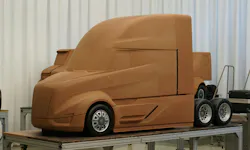
Why do original equipment manufacturers (OEMs) launch electric vehicles when the industry is already cooling off on them? Why do big truck manufacturers launch new, often more expensive trucks when their customers are working in an industry that’s experiencing a financial downturn? It’s not that these OEMs are tone-deaf. And it’s not that they didn’t do their research about what their customers need and when. It’s the opposite.
Vehicle development begins years in advance. In some cases, development takes 10 years (at least that’s the case for engine manufacturer Cummins). Then some projects begin 15 years in advance (think: advances made on special projects like the SuperTruck program that could spill over into production models). In other cases, if an OEM is simply giving a current model a facelift, the development takes much less time.
Regardless, designing and producing these machines doesn’t happen overnight. And that’s the case for vehicles from Class 1 to Class 8, and even the case with suppliers like Cummins. FleetOwner chatted with Ram, Volvo Trucks, Kenworth, and Cummins to understand the development process and to discover why bringing a model to market takes as long as raising a second-grader.
Phase 1: Market analysis and pre-production research
The timeline for each OEM to bring a vehicle to market looks different; each manufacturer has its own process. Yet, each follows a similar path. That path starts with research.
Light-duty: Balancing retail and commercial demands
The beginning of the research process looks different for each OEM. For Ram, manufacturer of light-duty vehicles such as the Ram 1500 pickup and the Ram ProMaster, that process begins by identifying market trends—sometimes projecting up to five to 10 years down the road. This is Ram’s product portfolio planning period, Matt Huber, SVP of Ram brand product, told FleetOwner. The more intensive research, which is centered on the customer, begins once a product has been decided upon.
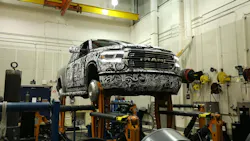
Customer research includes interviews and surveys. Ram will even send teams to someone’s home to understand their daily routines, helping the designers build a vehicle that meets as many needs as possible.
Ram is in a unique position. Unlike Volvo Trucks and Kenworth, which produce only commercial vehicles, a significant portion of Ram’s profits comes from the consumer, or retail, market. Huber said this doesn’t necessarily make Ram’s commercial product more difficult to develop. Instead, he believes it makes Ram products better.
“When you get into three-quarter-ton trucks, there's still a lot of retail customers that are using those vehicles,” Huber said. While those customers don’t have commercial needs, they do have towing and hauling needs. This “helps us understand the customer better, probably, because we're not just doing commercial research, [and] we're not just doing retail research. … Ultimately, we all work together and hopefully get a better product out of it.”
Heavy-duty: Aerodynamics, technology, and autonomy
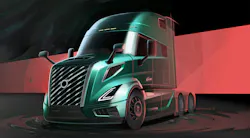
Research for commercial vehicle OEMs such as Volvo Trucks and Kenworth is more focused on technology and efficiency. Volvo Trucks North America’s latest long-haul launch, the VNL, uses a completely new platform. Volvo started laying the groundwork on this design back in 2016, and much of the time between then and its launch was dedicated to different types of research.
With the hope to eventually use this platform for autonomous trucking, before completing its design, Volvo sent a research team to the Consumer Electronics Show in Las Vegas, one of the largest technology trade shows in the world, to gather background on what’s upcoming in the tech industry in terms of software, lighting, and safety—an important aspect of Volvo Trucks' designs, Volvo Trucks Head of Design Brian Balicki told FleetOwner.
Similarly, Kenworth’s production process takes from five to seven years, and Kenworth Design Director Jonathan Duncan said the majority of the time is spent on research.
“The thing that takes the longest for us, and that is the biggest variable, is making sure you're designing the right thing,” Duncan told FleetOwner.
This includes meeting with Kenworth customers and taking cues from the brand’s customer council. It’s in these meetings that Kenworth seeks to understand where its customers’ businesses are headed and how Kenworth designers can solve future problems with a solution that’s advantageous for everyone, Duncan explained.
Engine development
For engine manufacturer Cummins, the design of a new product can take from three to 10 years, Lisa Prentiss, program management leader for North America on-highway at Cummins, told FleetOwner. The length depends on whether it’s a new product or an update to an existing one.
There are three things that would trigger the global engine manufacturer to design or modify a product. The first reason is related to emissions requirements coming down the pike.
“Every three or four years, we have a new emissions regulation coming in that we have to redevelop all of our products to meet, and that very much drives the kickoff of what technologies we’re going to use,” Prentiss explained.
Another reason Cummins would update its engine lineup is if there’s a technological advancement that could prove beneficial for customers, be it more cost-effective, more efficient, or more powerful. The third and final aspect that would trigger a new development for Cummins is if the company has an opportunity to design an engine for a different application.
Once a trigger has been identified, Cummins jumps into research, determining specific emissions-reduction approaches and engine and software architectures. This pre-production process can take up to three years for a major development.
Sometimes, Cummins begins this research process many years in advance of a new emissions requirement. Cummins has already begun work on its 2030 engines, which are subject to more stringent emissions regulations. “We think [our 2030 engines are] going to look like this, and we start running some R&D-type tests that say, ‘How hard is that for us to do? Is that technologically possible to even hit that level?’ And that will go on for two or three years before we ever start product development,” Prentiss explained.
Picking suppliers and facilitating manufacturing (within first 1-3 years)
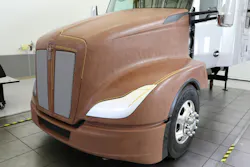
The pre-production stage includes research, as well as deciding on suppliers and planning manufacturing early in the process.
“We don't do anything without considering the fact that [the truck] needs to be built sometime,” Kenworth’s Duncan said. “If we have the best idea in the world but we don't have a supplier that can build the parts, or it doesn't work in our current or [with] a reasonable update to our assembly process, then we're not going to do it.”
In Volvo’s case, the manufacturing team wanted to create a design that increased manufacturing efficiency, which required involving them early.
“How the roof is assembled on top of the cab was a big change for us in our product, and it was an important and the right decision to make because it made the assembly line more efficient,” Balicki said. “These changes are important to know in advance because when we're designing … we know how they're going to assemble the product.”

It was also important for Volvo to involve manufacturing early on because a completely new manufacturing facility had to be built from the ground up to support the new product.
“Due to the scale of this platform, an entirely new factory was built behind our existing factory, and that was to allow us to pilot the program before we implemented it into full production,” Balicki said.
This also ensured Volvo could produce the current models until the release of the new VNL.
While building a new facility wasn’t something Kenworth, Ram, or Cummins mentioned, Balicki said it’s not uncommon for OEMs to go this route, especially when designing a new platform or powertrain. Readers might see this more commonly in the light-duty segment, with electric vehicle manufacturing facilities such as General Motors’ Factory Zero and Ford's BlueOval Battery Park in Michigan.
Before Ram chooses suppliers or modifies manufacturing facilities, it must make the business case for the product to secure funding (which we’ll get into later). By the time funding is approved and suppliers are chosen, Huber said the vehicle’s design has been mostly finalized, and “it’s time to go build tools.”
Cross-functional engineering, supplier integration
Once these companies have conducted their research and gotten a rough idea of what the next model will entail, it’s time to take the idea up the chain (someone’s got to sign off on funding, right?). For Volvo Trucks, Kenworth, and Cummins, that approval comes from each respective company’s CEO. But for Ram, that final approval must come from Antonio Filosa, CEO of Stellantis, Ram’s parent company.
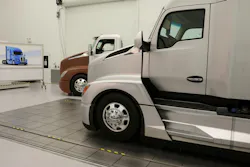
By the time the new product program is approved, the teams have a solid understanding of the vehicle’s or engine’s overall design. This is when the OEMs begin building different teams for the program. This includes design teams for each component, as well as purchasing, marketing, dealer, service, customer care, and manufacturing teams; supplier partners; and much more. All in all, a new product program for all OEMs FleetOwner spoke with can include hundreds of employees—and this doesn’t count the employees working for OEM suppliers.
Kenworth, Cummins, Ram, and Volvo Trucks all said these different teams work in parallel, designing different components at once. This requires extremely close collaboration among teams.
Not only are the OEMs designing and building components, but their suppliers are as well. To ensure each OEM team and supplier team remains on target in their component design, OEMs employ a stage-gate production process. This process essentially requires component validation at certain stages before moving to the next stage. Further, program managers help keep the project on time. Kenworth’s Duncan calls this part of the process “beautiful chaos.”
Validation and real-world fleet testing
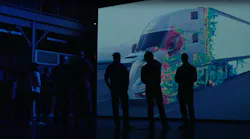
While testing takes place at each gate, once the vehicle nears final design, testing becomes more rigorous. The vehicle OEMs send these products for cold-weather testing—many test in Canada, while Ram tests in the Upper Peninsula of Michigan—and for hot-weather testing in the desert, often in Arizona or Nevada. This testing ensures vehicles run optimally regardless of the climate or weather.
This testing is imperative for OEMs, as it identifies weaknesses or oversights in product design.

Huber uses the example of ventilation: “Sometimes when we're doing hot testing, you'll realize that maybe cooling isn't meeting what the targets are. So then you need to have larger cooling openings in the grille, or have different ducting going into the brakes or through fascia ducts.”
After climate tests, truck OEMs then send models to customers for testing. Customer testing is used to validate “fine details,” Duncan said, as the vehicle has been validated and tested so thoroughly up to this point that the customer should experience no major problems.
It’s also during these years that Volvo begins its marketing strategies, often using model prototypes in marketing materials, Balicki said.
The process is a bit different for Cummins. When the team is satisfied with the engine design, it builds a few models via a prototype manufacturing line and places them in Cummins’ own fleet of trucks from multiple manufacturers. Cummins will also provide “seed” units to its OEM customers for testing. During this phase, Cummins tests using its own specifications and also receives feedback from its customers, such as the placement of the engine being too close to a frame rail, difficulty servicing a non-engine component, and more.
Another large portion of Cummins’ test process is certifying its engine for compliance, which Prentiss said Cummins conducts in-house. But it’s also the most time-consuming aspect of the engine’s production cycle. For an engine program that’s only three years long, certification could take up to 18 months.
“We run all of our testing in accordance with the rules, and we submit all … of the evidence,” Prentiss said. “Then the agency grants us the certificates, and we're able to tag the engines as certified and sell them as certified.”
When testing is complete and the design is nearly final, the engine then moves to the main assembly line for larger production. It’s at this stage when Cummins runs its quality checks with both the assembly process and supplier components. Cummins then moves to installation quality testing, ensuring the engine’s components are all functioning properly with the truck. This is the last stage and a more “refined” stage of production, Prentiss said. After all checks have been cleared, the engines produced are loaded onto a truck for shipping.
Trust the process
Three to eight years sounds like a long time to get a product to market. But as Ram’s Huber told FleetOwner, while it might seem slow, internally, these OEMs are cycling through the process quickly. Not to mention that this cycle is repeated with every new model of every new vehicle or engine, and multiple programs are running at once.
Balicki said what makes all the difference in the trucking manufacturing process is the fact that these trucks aren’t just tools—for many they’re a livelihood, or even a home for multiple weeks at a time. Not only that, a truck’s durability affects everyone because trucks keep the nation’s economy moving.
“If a truck is not delivering a product to a certain location, then there are impacts down the line,” Balicki said. “For us, we need to make sure that these products are robust enough and also have the right features and functions for our customers throughout the life of the vehicle.”
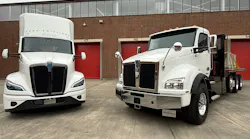 Kenworth electric trucks
 Telematics Tower of Babel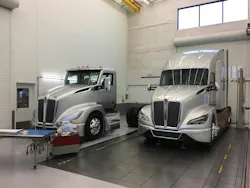
The process of building a machine that many of us take for granted day after day is complex; even Kenworth’s Duncan said the whole process still amazes him—even after seeing it time and again at Kenworth over 20 years.
“It's a seamless operation that's amazingly complex, and somehow it all works,” Duncan said. “To me, that's the part that's always pretty amazing. After our [design] is done, all sorts of things happen so there can be a truck going down the road.”
Finally, Prentiss likens the entire process to professional football. Building a championship team doesn’t begin on the first game of the championship season. It begins years in advance, scouting athletes, assembling the right coaches for the job, developing chemistry among players, and more. The production cycle for Cummins engines follows a similar process: research, team building, component cohesion, and validation.
Rome wasn’t built in a day, and neither was your favorite work truck. It’s your favorite because of the time and care hundreds of engineers and researchers put into it. Trust the process.
About the Author
 Jade Brasher
Jade Brasher
Executive Editor Jade Brasher has covered vocational trucking and fleets since 2018. A graduate of The University of Alabama with a degree in journalism, Jade enjoys telling stories about the people behind the wheel and the intricate processes of the ever-evolving trucking industry.