Rohlwing: Do you have a time bomb on wheels?
Key takeaways
- Wheel-offs can expose gaps in fleet maintenance, inspection, and documentation practices.
- Drivers can help spot potential wheel-end problems during daily inspections.
- Regular torque checks can help fleets identify loose fasteners before a wheel-off occurs.
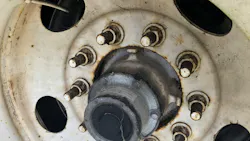
Wheel-off accidents are back in the news after an incident in Ohio claimed the life of one driver and damaged several vehicles. A trailer’s left rear tire detached and bounced into oncoming traffic, shutting down I-70 in both directions for hours while officials investigated and cleared the scene. It was the third wheel-off involving a truck tire in three months. An earlier one in Washington State damaged a minivan, and another in Arizona crashed into a home.
No statistics show how many wheel-offs occur each year, but reported detachments are limited to cases where motorists are injured or property is damaged. I’m guessing most end up in a field or forest and go unreported. Given the number of truck tires on the highway, the actual percentage of wheel-offs is definitely less than 1%, but the ones that get media attention are the ones that fleets dread.
If a wheel-off results in injuries and/or property damage, the ensuing investigation will inevitably lead to civil litigation. The plaintiff’s experts will scrutinize maintenance practices and driver and technician training programs. Their goal is to prove negligence and secure a massive settlement or nuclear verdict if the case goes to trial. Either way, it will result in payments to the injured parties that are dictated by the steps that fleets took or failed to take that could have prevented the accident.
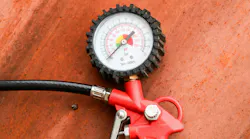 Proper tire inflation practices help fleets reduce costs and meet OSHA requirements
 Roadside tire service safety: How fleets can reduce technician accidents
On the vehicle maintenance side, the plaintiff will request copies of all records for the unit in question, as well as records for other equipment, to determine whether the fleet has systemic mechanical issues. Detailed records are easier to defend, while limited or missing records help build a negligence case.
Are tractors and trailers regularly inspected beyond the required annual inspection, or is once a year enough? Who performs the inspections, and have they been trained to identify potential failures before they result in an accident? Are pre-trip and post-trip inspections recorded and maintained? This is just a sample of the questions that will be asked.
Drivers are the front line of defense, and they need to know the signs of a potential wheel end issue. The first thing to look for is any sign of shifting or looseness around the studs and nuts. Wheel-offs don’t happen overnight. They typically take hundreds or thousands of miles to develop to the point where the wheels detach from the axle, so you should see visible clues that the wheels have moved.
Generally, the amount of stud that protrudes beyond the nut is uniform around the bolt circle. Any variation signals a potential problem, so the driver should physically check whether the fastener is loose. If the driver performs a thorough daily visual inspection, loose wheels typically do not become wheel-offs.
Maintenance personnel also play a critical role in preventing loose wheels. During the preventive maintenance inspection (PMI), it’s a good practice to confirm the lug nut torque on each wheel end. It’s as simple as setting the torque wrench to the lowest end of the torque range and checking that none of the fasteners move in a tightening direction.
You can do this without lifting the axle; it's a simple way to confirm none of the lug nuts are loose. If nothing moves, then none of the fasteners are under-torqued. If any move in a tightening direction, remove the wheels and inspect them before reinstalling with the recommended torque.
Finally, perform the torque check after installing the wheels. The recommended interval is 50-100 miles to allow the bolted joint to settle. As with the PMI torque check, any movement in a tightening direction indicates the wheels should be removed and inspected. Documentation of regular torque checks after installation or a PMI will be incredibly valuable in the event of a lawsuit.
The consequences of a wheel-off can be severe. Fleets that document preventive steps at multiple levels will have a much better defense than carriers with little to no documentation or systems to prevent wheel detachments. In the event of an accident, the plaintiff will try to paint a picture of the fleet, and that image will determine the outcome.
About the Author
Kevin Rohlwing
Kevin Rohlwing is the SVP of training for the Tire Industry Association. He has more than 40 years of experience in the tire industry and has created programs to help train more than 180,000 technicians.