The real promise of systems that drive fleet action
Key takeaways
- Systems of action move trucking from static records to real-time dispatch and decision execution.
- AI and live data enable fleets to reroute loads, improve efficiency, and boost profitability.
- Human dispatchers and AI systems work together to improve decisions, not replace them.
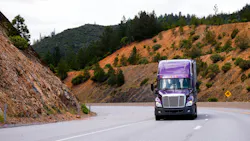
Transportation management systems (TMS), accounting systems, and fleet management systems have always done one thing very well: record what has already happened. For decades, the trucking industry has relied on these systems of record, which were designed to capture and store data. But now, a new category is emerging across finance, health care, and retail software: the system of action.
As Microsoft describes it, modern platforms are evolving from systems that simply record information into systems that “drive decisions and outcomes,” using real-time data to take action automatically. A system of action doesn’t just show a dispatcher that a load is delayed; it tells the dispatcher how to reroute it, notifies stakeholders, and adjusts downstream operations in real time. In an industry where timing, cost, and coordination remain under constant pressure, this shift is changing how leading fleets operate today.
In highly dynamic fleet operations, real-time decisions made using a system of action lead to better revenue growth, better customer service, productivity, and profitability. Artificial Intelligence (AI) is a new component to making that possible, but it can truly only be enabled by the right data these new systems collect.
While electronic logging devices provide essential visibility and in-cab connectivity, the TMS remains the operational core of dispatch planning and execution, collecting critical data on fleet activities that ultimately drive financial transactions on both the revenue and the cost sides. Unlike those systems of record where operational activities get recorded after the fact, systems of actions are used to execute actual operational activities and gather valuable activity data along the way.
In this new environment, fleets will benefit most from AI-driven TMS capabilities when AI supports dispatchers, load planners, and operators with better, real-time guidance—enhancing, not replacing, their decision-making. With this actionable information, fleets can capitalize on opportunities for significant performance gains, such as revenue growth, efficiency, cost savings, and improved reliability, or capabilities to sharpen their unique service edge. Before exploring these opportunities, it’s important to clearly define and distinguish the three types of systems:
- Systems of record, such as legacy TMS, paper, and spreadsheets, serve backward-looking documentation and compliance, not real-time execution, nor forward-looking planning decisions. Lacking real-time data, they cannot enable intelligent decisions and translate these decisions into better actions.
- Systems of decision promise optimization improvements, but without real-time data from driver and dispatcher activities, and seamless integration into dispatch and driver workflows, these systems struggle to translate intelligence into action.
- Dispatchers, lacking trust or context, override the recommendations. And every override, while it feels local, acts globally: Each one trades a measurable network-level outcome for an unmeasured local preference. Because the assignments are coupled, a single override doesn't just change one decision; it unravels the plan around it. The AI-optimized solution collapses into network-wide manual dispatch.
- Systems of action capture data from real operations, provide real-time visibility across multiple technologies, and enable real-time intervention via highly visual, interactive user interfaces. Decision intelligence functions, such as optimization or predictive analytics, are natively embedded in systems of action, ensuring that data-driven recommendations translate into actions and thus true operational value.
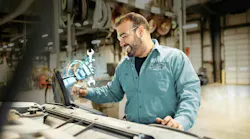
Operations framework for systems of action and AI decisioning
Systems of action excel in fast-paced, constantly changing operations by delivering three key benefits: automation, error avoidance, and improved decision-making. While automating back-office tasks is valuable, avoiding errors and improving resource allocation have the most powerful impact on a fleet’s bottom line and long-term success. This is where systems of action with native decision intelligence become the most helpful.
Capable systems of action are still rare in transportation, and even fewer have native decisioning capabilities. Systems of action have been limited to small fleet operations that depend heavily on brokered freight. Their value is limited to automating back-office tasks, whereas the majority of a fleet’s human and financial resources are not tied up in the office but in the field.
Improving resource allocation through dispatch optimization and reducing driver or data entry errors unlocks far greater value. What makes this possible is that systems of action with native decision intelligence have a structural advantage over standalone systems.
Because the system of action is the primary workspace for most load planners, dispatchers, billing, and payroll personnel, leveraging AI to avoid errors or improve dispatch decisions happens in the same environment where their work naturally occurs. This allows the human and the machine to interact more organically.
For example, humans can improve dispatch algorithm outcomes by feeding it new, situational, and dynamic information, while machines can improve the human decision-making process by suggesting better actions and providing explanatory evidence for why those decisions are superior. The result is true collaboration between the two, each making the other more effective.
Co-intelligence shaping human and AI collaboration in fleets
Whether a private operation serving an internal customer or a for-hire transportation provider with external customers, fleets are service operations. And, as in most service organizations, their most important asset is people—the dispatchers, load planners, drivers, and operations managers who make thousands of critical decisions every day.
In these organizations, the purpose of technology should not be to replace people; it should enable them by reducing the friction of manual processes, freeing them to focus on judgment-intensive work that machines cannot reliably perform.
While the vision of an autonomous agentic AI system for fleets is an interesting idea, it falls short of meeting the fundamental needs of fleet operators. That’s not because of technical limitations, but instead because it is the wrong solution for many of the problems they are solving.
While some tasks can be performed autonomously (e.g., extracting data from a scale ticket or bill of lading), complex decisions require human judgment combined with a machine’s unbiased computation. Algorithms and analytics enhance decisions but are just components of a process and workflow controlled and completed by humans.
Unlike humans, machines compute fast but make judgments very slowly. Systems of action with embedded decision intelligence enable human-machine interactions that augment human capabilities.
About the Author

Hans Galland
Hans Galland is the founder and CEO of BeyondTrucks, the provider of an AI-native transportation management system for private and specialty fleets. A frequent speaker at industry conferences and the author of transportation, logistics, and supply chain thought leadership pieces, Hans has received the Gold Globee Award for Disruptor and Gold Stevie Award for Best Entrepreneur in Transportation.