Roeth: Factor emissions into your equipment buying decision
Key takeaways
- Well-to-wheel analysis accounts for emissions from fuel production, distribution, and truck operation.
- Diesel, natural gas, BEV, and FCEV trucks each have distinct life cycle emissions profiles.
- Fleets should consider emissions alongside total cost of ownership when selecting powertrains.
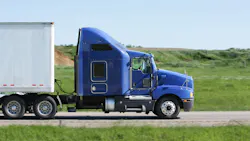
Reducing vehicle emissions is something the trucking industry has been working on for decades—and we’ve made very good progress. For example, since the 1990s, the amount of NOx and soot released by a single truck has plummeted. Using advanced filters and chemical treatments in the exhaust, manufacturers have reduced these pollutants by more than 96%. Carbon has improved by around 20%.
Historically, when we talked about vehicle emissions, we talked about what was coming out of the tailpipe. But as we move through trucking’s Messy Middle with its multiple powertrain options, we need to take a more comprehensive look and move to a well-to-wheel perspective. The well-to-wheel, well-to-tank, or "Source to Highway," perspective views emissions generated during energy production, emissions generated through energy distribution, and emissions produced during vehicle operation.
One of the things we looked at during Run on Less – Messy Middle was emissions from the 14 trucks that participated in the Run. We looked at both greenhouse gas emissions and criteria pollutants.
We learned some interesting things about emissions in our From Source To Highway: The Messy Middle Emissions Report. We used Argonne National Laboratory’s GREET (Greenhouse Gases, Regulated Emissions, and Energy use in Transportation) model to calculate well-to-wheel emissions.
The four fleets that fielded diesel trucks in the Run demonstrated that they are continuing to find ways to reduce emissions, either by using aerodynamic devices to consistently reach double-digit miles per gallon or by moving to renewable or biodiesel rather than conventional diesel as their fuel.
From the three fleets that had natural gas-powered trucks in the Run, we learned that natural gas is no longer a niche solution but rather a viable option, especially with the introduction of the Cummins X15 engine. This group proved that fleets don’t have to wait for battery-electric trucks to make sustainability improvements.
We followed five battery-electric vehicles (BEVs) in the Run and found that they are capable workhorses that are seeing significant greenhouse gas (GHG) reductions depending on the cleanliness of the grid that powers them.
We also had two hydrogen fuel cell electric vehicles in the Run, and they demonstrated they can successfully navigate the Messy Middle; however, it is important to look at the hydrogen source to determine actual emissions reductions.
As fleet operators evaluate their options for decarbonization, they are faced with a variety of choices: clean fossil diesel, renewable forms of diesel, conventional and renewable natural gas, BEV, and FCEV. Each has a distinct health impact profile when analyzed from a life cycle perspective.
Perhaps one of the biggest takeaways from the report was that the carbon footprint of a truck is determined more by the origin of the fuel molecule than the metal of the engine block.
Freight emissions do impact public health, and that impact is disproportionate depending on where the freight is hauled. Reducing emissions in populated freight corridors leads to significant reductions in negative health outcomes and health care cost expenditures for people living in those areas.
We encourage fleet managers to not only look at the total cost of ownership when determining which powertrains to run in their trucks but also include emissions considerations in the equation. That will give them a better sense of the trucks they should be adding to their fleets.
Additionally, we encourage fleets to look at the two other Run on Less – Messy Middle reports—Terrain, Technology, and Telematics: The Messy Middle Operations Report and Forecasting the TCO of Powertrain Alternatives: The Messy Middle Cost Report—in concert with the emission report to determine a path for making decisions on which efficiency technologies are best suited for their operation.
 Three takeaways from ATRI’s 2026 trucking cost analysis for fleet operators
About the Author
 Michael Roeth
Michael Roeth
Executive Director
Michael Roeth is the executive director of the North American Council for Freight Efficiency. He serves on the second National Academy of Sciences Committee on Technologies and Approaches for Reducing the Fuel Consumption of Medium and Heavy-Duty Vehicles and has held various positions with Navistar and Behr/Cummins.