Women leaders are rising up; drivers and techs falter
Key Highlights
- Women show notable growth in transportation leadership roles, according to the Women in Trucking WIT Index.
- Despite gains in leadership, women drivers remain stagnant, and women technicians have decreased, highlighting areas needing improvement.
- Industry efforts should include creating female-friendly workplaces, such as gender-specific gear and safe parking, to attract and retain women in all roles.

A trucking industry trade show or conference looks much different than it did 10, and even five, years ago. More women enter the industry with each passing year, which means more women at conferences, more women behind a desk, and more women in the corner office.
While I wish it were true that women were filling trucking industry roles across the board, the Women in Trucking WIT Index, which records gender inclusion data for the industry, indicates that some roles are recruiting women more steadily than others.
Below is a snapshot of the most current WIT Index results (2026/2027) compared to the most recent (2024/2025).
Comparing this year’s WIT Index to last year’s
The good news is that the percentage of women is growing in multiple trucking industry roles. The bad news is that some roles have seen no increase in women or—even worse—have seen women exit altogether.
Let’s start with the good news.
More women hold C-suite titles this year than last. On average, women make up 31% of C-suite executives in trucking; this is up 3% from the average of 28% in the previous WIT Index.
Additionally, more women are becoming leaders in trucking. Women now make up 37.5% of company leaders in the industry, up from 34.5% in the last WIT Index.
 jbht_truck_dedicated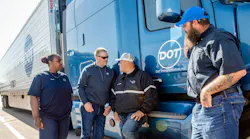
According to the 2026/2027 WIT Index, more women are wearing headsets. The largest year-over-year increase is in the percentage of women in dispatcher roles. Women make up 45.5% of dispatch roles in 2026, up from 38.5% in the last Index.
Safety roles also saw a significant increase. Women now make up 44% of safety roles in the industry, up from 38.5% in the previous WIT Index.
One interesting trend is the increase in women in human resources and talent management roles. Women dominate these roles across multiple industries, with a national average between 65% and 75%, depending on the source. The WIT Index of 2024/2025 indicated that women made up 74.5% of these roles in the industry. The latest Index shows that women make up 76.5% of human resources and talent management roles in the industry.
Now for the not-so-good news…
The industry is not doing a better job of making an inclusive environment for professional women drivers. The latest Index indicated that the percentage of women drivers stayed the same at 9.5% compared to the previous year. This is about 2% lower than WIT Indexes have indicated in the past. While this number is stagnant, at least it isn’t decreasing.
While who these women choose to drive for speaks more to specific companies, the Index showed that women drivers are moving away from medium-to-large enterprises (companies with 500 to 4,999 employees) to major-to-giant enterprises (companies with 5,000 or more employees). The previous Index revealed that only 5% worked for giant enterprises and 12.5% worked at medium-to-large enterprises.
And for the bad news…
The percentage of women serving on boards of directors decreased to 29%, down from 29.5% in the previous Index. While a half-percentage-point drop might not sound the alarm, it’s worth looking at our own organizations to see if we can prevent declines like this in the future.
The biggest drop in the percentage of women in trucking roles is in technicians. This year’s WIT Index found that women make up 2.5% of technicians in the industry. Last year, that number was 4%.
What does this mean for women in the trucking industry?
The increase in women in leadership roles and the C-suite should be seen as a positive by everyone in the industry. Data backs the benefits of women in leadership roles.
Bloomberg Intelligence found that “companies with more women on boards and in leadership roles outperform peers” and deliver annual returns that are 2-5% higher than peer companies with less gender-diverse boardrooms. A report from BoardReady found that “companies with more than 30% of board seats occupied by women delivered better year-over-year revenue in 11 of the top 15 S&P 500 sectors than their less-gender-diverse counterparts.” Other studies and reports determine similar results.
What’s troubling is the lack of growth in women drivers and the decline in women in technician roles.
The industry as a whole is responsible for making these roles desirable for women. While organizations like Women in Trucking do a great job raising awareness, each company should do its part to draw women into these roles—including advocating for investment in safe truck parking and more female-friendly truck stop environments.
Companies with maintenance shops should also ensure women feel welcome by providing gender-specific jumpsuits and additional provisions, such as a women-only restroom.
The women in this industry want to be part of it for years to come. It’s the job of those of us already in the industry—women and men alike—to make it even more welcoming and desirable for women who are curious about joining.
About the Author
 Jade Brasher
Jade Brasher
Executive Editor Jade Brasher has covered vocational trucking and fleets since 2018. A graduate of The University of Alabama with a degree in journalism, Jade enjoys telling stories about the people behind the wheel and the intricate processes of the ever-evolving trucking industry.