PepsiCo expands autonomous freight deployment with Gatik to support food and beverage distribution
Key takeaways
- PepsiCo is expanding autonomous freight deployment with Gatik across its food and beverage supply chain.
- Gatik autonomous trucks currently operate for PepsiCo in Texas, Arizona, and Arkansas.
- The partnership supports regional routes focused on delivery consistency and transportation capacity.
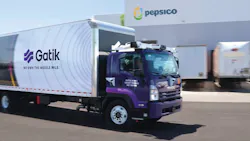
PepsiCo recently entered a multiyear strategic partnership with Gatik to expand autonomous freight deployment across its North America food and beverage supply chain. The agreement will bring autonomous trucks into PepsiCo’s regional transportation networks to support delivery consistency, transportation capacity, and customer service.
The company, which manages one of the world’s largest food and beverage supply chains, will use Gatik’s autonomous freight technology to support high-frequency, time-sensitive deliveries between facilities. The deployment builds on Gatik’s existing operations with PepsiCo, which began in 2022 and currently include autonomous trucks operating in Texas, Arizona, and Arkansas.
For refrigerated and temperature-sensitive freight networks, reliable regional transportation is critical to maintaining product availability and meeting customer demand. Gatik’s autonomous trucks are designed for end-to-end deliveries across highways and surface streets, with route orchestration capabilities that allow routes to adjust based on operational needs, including changing stops, demand patterns, and distribution center activity.
“Serving our vast network of customers requires a supply chain that is safe, reliable, and built for the future,” Jim Farrell, SVP of supply chain for PepsiCo, said. “Gatik is already operating inside our networks and brings the autonomous freight technology, commercial experience, and scale we need to strengthen service, add capacity, and move products more consistently for our customers.”
What this means for the trucking industry
The expanded PepsiCo and Gatik partnership demonstrates how autonomous freight technology is moving into commercial supply chains that depend on frequent, repeatable routes. Food and beverage fleets, including refrigerated operations, could be among the areas where autonomous systems provide additional capacity for regional transportation needs.