Ryder, International launch autonomous LT near Laredo
Key takeaways
- The pilot involves a factory-integrated International LT with PlusAI’s SuperDrive software, running a 600-mile daily route in Texas.
- The truck autonomously hauls freight from Laredo to Temple, Texas.
- The collaboration is ongoing, as both companies continue to refine and expand their autonomous trucking capabilities.
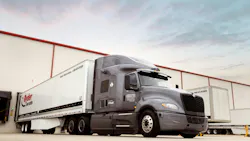
A new autonomous pilot is hitting the highways in Texas: International Motors and Ryder System have announced a joint autonomous truck pilot, running a factory-integrated AV in live freight runs.
For this program, Ryder is operating an autonomous-enabled International LT on a daily 600-mile route along the Interstate 35 corridor between Ryder locations in Laredo and Temple. The parties have been running the autonomous LT for over four months now and announced the pilot just this week.
What is the International-Ryder pilot?
Ryder has a history of participating in autonomous truck development for years, particularly around fleet management, including work with Kodiak, Gatik, and Waymo, to name a few. This latest project with International, though, is focused on autonomous hauls themselves.
“On our fleet management side, we’ve had a couple different engagements around maintenance and operational support of emerging fleets,” Seth deVulgt, senior director of RyderVentures and new product strategy for Ryder System, told FleetOwner. “This is unique, and it’s a jump towards the transportation side where we’re hauling Ryder freight with autonomous vehicle technology.”
International’s autonomous trials
Ryder is the first official partner in International’s autonomous fleet trial program. International had announced the trial program in September, managing I-35 hauls from International’s autonomous hub in San Antonio. The company aims to engage fleets of all sizes to better understand autonomy’s applicability.
“The pilot program that we’re running is really how can we start to engage our customers, our fleets, in terms of what Level Four autonomous driving means for them?” James Cooper, head of autonomous solutions at International, told FleetOwner. “How can we create a solution which actually meets their needs—something which is usable, something which is scalable, and something which really gives value?”
International is monitoring everything from vehicle performance to support, service, and uptime. The OEM also aims to continue expanding its trial program.
“We expect we’ll be bringing on more customers and be able to announce more customers in the next few months,” Cooper said.
The parties started talking about the pilot a little over a year ago. The conversation started as part of a regular product review between Ryder and International, where Ryder showed interest in autonomous trucking. The pilot’s real operations quietly started at the beginning of November.
The daily autonomous run has three key locations: An autonomous truck starts its day in San Antonio, runs to Laredo to pick up a load, stops at Temple, where it hands off the load, and returns to San Antonio. A human driver finishes the haul to a participating customer location.
Ryder approaches the entire operation “with [the] end-customer in mind,” deVulgt said. The company sees the pilot as an opportunity to evaluate the technology and its purpose for improving customers’ supply chains.
The truck: A special LT with PlusAI’s SuperDrive
The pilot uses what International calls its second-generation autonomous tractor: an International LT powered by the S13 powertrain, equipped with a suite of factory-installed sensors, and running PlusAI’s SuperDrive software.
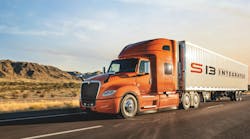
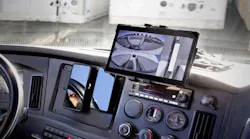
The “second-generation” designation takes the common base LT and adds PlusAI-specific hardware at the factory level. The companies’ engineering teams began working together around the beginning of 2024.
“This vehicle represents the first time that we have built at our factory an integrated vehicle with the PlusAI technology stack put onto our chassis, and we’ve managed that installation and integration of the vehicle,” James Cooper, head of autonomous solutions at International, told FleetOwner.
This deep hardware-software integration is one of the reasons Ryder is interested in International’s autonomous tractor. “International, in setting up their own autonomy unit within their business, provides that close working relationship between base vehicle and autonomous hardware/software,” deVulgt said.
International currently operates a small fleet of its autonomous tractors, which Cooper estimates is currently around “double figures.” Those tractors are involved in everything from running test tracks to engineering to real customer fleet operations.
The autonomous lane: San Antonio, Laredo, Temple
The Laredo-Temple lane is a busy one for Ryder and is expected to get even busier, making it a good fit for the quick capacity that autonomy offers.
“From a Ryder perspective, it’s an extremely active freight line for us in its current state,” deVulgt said. “Secondly, it’s a lane in which we anticipate quite a bit of growth in the near and long term."
The autonomous route is one leg of a longer route that eventually goes up to a customer in the Midwest. The parties are proving that logistics companies can add autonomy to an existing route with existing infrastructure.
“We’ve taken an existing leg of operations and basically given [Ryder] a seamless installation of an autonomous drive on that leg,” Cooper said. “They’ll then do a swap over to a manual driver, and it continues up.”
“This pilot with International put [an autonomous driver] in an existing lane,” deVulgt said. “We’re not manufacturing anything that didn’t exist prior. We’re getting to see if the autonomous vehicle technology works in a real-world scenario—and we get a front-row seat to evaluate that.”
How does the truck interact with humans?
For carriers, one of the main challenges of autonomous trucks will be how to co-locate and execute those human operations that can’t be replaced: inspections, fueling, loading, and customer interactions.
International is currently executing the truck’s pre-trip inspections at its San Antonio location. The OEM stated that its pre-trip inspections have remained below 30 minutes.
“We’re building up all the processes and support for safe autonomous vehicle inspection and preparation at our site in San Antonio,” Cooper said. “That’s where our daily sort of check-and-release happens before each leg of the drive.”
The loading, meanwhile, happens at Ryder’s existing Laredo facility. Since the truck drops its freight at Temple, it doesn’t yet need to handle any of the final customer interactions.
International is also placing a safety driver in the truck’s driver seat, ready to take over if needed. Once International proves a robust platform, though, it plans to go driverless. The company is planning to haul without a safety driver before the end of 2027.
Improved fuel efficiency
The parties announced that the collaboration has resulted in significant fuel efficiency improvements, thanks to both the LT’s S13 powertrain and the autonomous driver’s smooth operation.
While the parties wouldn’t disclose exact fuel efficiency gains, Cooper said “it’s fair to say [Ryder is] very impressed with the progress … It’s a noticeable difference, and they’re very happy with what they’re seeing.”
The autonomous pilot’s next steps
The program could undergo several iterations and improvements over time. For example, while the inspection process happens in San Antonio now, International said that it may move inspections to the Ryder sites.
“This isn’t a static project we have together,” Cooper said. “Once we’ve collaborated on those processes and gotten to a standardized release process, the goal is to put that process on-site in Laredo. I expect that, by the time we do that, we won’t be looking at Temple anymore. … We use Temple because that’s where the natural driver swap over is, but we’d be looking probably at the next terminal for Ryder and to build those processes at each end.”
The companies also have no set ending for their collaboration as they continue to improve their autonomous hauls.
“We’re excited to continue learning as [International] unlocks different functions and features,” deVulgt said.
About the Author
 Jeremy Wolfe
Jeremy Wolfe
Editor
Editor Jeremy Wolfe joined the FleetOwner team in February 2024. He graduated from the University of Wisconsin-Stevens Point with majors in English and Philosophy. He previously served as Editor for Endeavor Business Media's Water Group publications.