Isaac aims to cut managers' workloads with AI
Key takeaways
- Isaac’s AI-powered in-cab warnings let drivers correct unsafe behaviors before incidents reach safety managers.
- Configurable warning periods and privacy controls help fleets balance safety oversight with driver trust.
- New AI tools target lost crash footage and fuel discrepancies to support incident reviews and cost control.
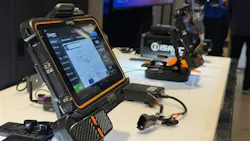
MONTREAL—Isaac Instruments wants to give drivers the opportunity to fix their own unsafe behaviors before fleet managers ever hear about them, reducing the administrative burden of safety monitoring to the incidents that actually warrant attention from management.
At its Horizon User Conference, held October 6-8 at the company's headquarters outside Montreal, the telematics provider introduced new AI-powered in-cab warnings that let drivers self-correct certain behaviors before they are reported to management.
"I want [the system] to monitor everything. I just don't want to manage it. I want it to manage itself," Jean-Sebastien Bouchard, Isaac's chief product officer and co-founder, said during the conference keynote.
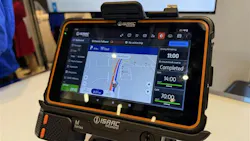
The technology builds on Isaac's existing InView AI camera system, which detects behaviors including speeding, rolling stops, close following distances, and cellphone use. The software's latest version introduces visual and audible alerts that notify drivers when unsafe behaviors are detected. Another update, expected to follow later this year, would add configurable warning periods, giving managers control over which incidents require immediate attention and which can be handled without intervention.
For example, a fleet could give drivers 10 seconds to reduce their speed after receiving a warning. If they slow down within that window, the warning disappears without generating a critical-event video for a safety manager to review.
"There's a correction window, correction time that [fleet managers] can define," Bouchard explained. "What's the acceptable amount of time for the driver to fix himself until it becomes an alert that now you're aware of?"

 trucking's top industry issues 2026 thumbnail
Reducing the video review burden
As AI cameras become more sophisticated, they can identify more unsafe behaviors. But that also means more footage for safety managers to deal with. Isaac projects that its expanded in-cab coaching capabilities could eventually reduce videos requiring review to an average of one per driver per week.
The approach also raises the question of what happens to footage when a driver corrects a behavior before the warning period expires.
According to Bouchard, the camera continuously processes video locally to preserve footage leading up to a potential incident, while AI processes the information on board the truck.
"When a warning happens and the driver self-corrects, that piece of image just disappears from the device," he explained.
The company is also introducing a privacy mode that allows fleets to detect unsafe behaviors without retaining inward-facing video. Fleet managers can still receive reports identifying how often certain behaviors occur and enable video recording for drivers who require closer monitoring.
These settings give fleets additional ways to balance safety oversight with driver privacy, particularly when introducing camera technology to drivers uncomfortable with continuous monitoring.
And despite this push toward automated coaching, the company emphasized that human involvement remains necessary, particularly for serious or repeated safety concerns.
"The AI sends the alert. The AI can give the wrap-up or the summary or tell you how good you were, how bad you were," Bouchard said. "But at the end of the day, the human touch is still going to be needed."
For fleets, the potential benefit is a more manageable approach to driver safety. Drivers receive immediate feedback on their performance, managers establish their own thresholds for intervention, and the incidents that do reach the office are more likely to warrant their attention.
Getting the detections right
Another challenge is ensuring that the warnings themselves are accurate.
When asked about false positives, Bouchard said the company targets 95% accuracy for its AI detection models, prioritizing confidence in reported events over capturing every possible instance of unsafe behavior.
"We'd rather miss some behaviors than generate ones that we're not certain about and generate false positives for the driver," he said.
The company acknowledged that overly sensitive detections could undermine driver trust, making drivers less receptive to warnings and coaching.
That trade-off becomes especially critical when the system is intended to encourage self-correction, as drivers and managers need to trust that the behaviors being flagged actually occurred.
Other announcements
Isaac also unveiled a Power Backup module for its Series 2 camera system, designed to preserve crash footage when a collision interrupts vehicle power. It can be retrofitted to existing Series 2 installations and provides enough backup power for the system to upload video, telemetry, and other incident data to Isaac's servers.
Without backup power, a severe crash could cut power before footage is transferred, potentially leaving fleets without video of their most consequential incidents.
"We want to make sure that you don't lose a video ever again," Bouchard said.
On the fuel management side, Isaac introduced an AI-powered module that compares fuel purchases with the amount of fuel actually added to a vehicle, automatically reconciling transactions and flagging discrepancies that could indicate theft, fraud, or reporting errors.
Dave Deschenes, driver experience coach at Flash Freight Systems, said the company identified an approximately 4-cent-per-mile fuel-cost difference between lower-scoring drivers and those performing significantly better using Isaac Fuel Coach. The carrier then introduced an incentive program to reward drivers for achieving higher coaching scores.
About the Author
 Lucas Roberto
Lucas Roberto is an Associate Editor for Fleet Maintenance magazine. He has written and produced multimedia content over the past few years and is a newcomer to the commercial vehicle industry. He holds a bachelor's in media production and a master's in communication from High Point University in North Carolina.