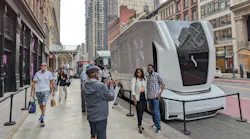
Einride eyes $250M in ’27 revenues, cash flow milestone the year after
Key takeaways
- Einride projects $250 million in annualized revenue and an 800-truck fleet by the end of 2027.
- Electric trucks currently deliver a 5% to 10% total cost of ownership advantage through AI-powered planning.
- Longer-term shipper contracts are helping Einride scale operations and address electric charging infrastructure challenges.
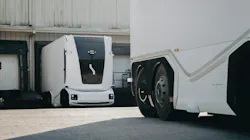
Einride executives are forecasting that the electric and autonomous freight venture will finish next year booking annualized revenues of $250 million, up from the roughly $90 million pace at which the company is set to finish 2026.
A successful 2027, CEO Roozbeh Charli and his team recently told investors, will mean Einride’s fleet will comprise about 800 trucks and set the stage for a 2028 in which revenues could pop to $600 million. That growth would allow 10-year-old Einride to break even on a cash flow basis.
Charli and other executives updated investors and analysts on Einride’s third quarter earlier this month, highlighting their report with word of eight new customers—growing the company’s roster to more than 40—that helped Einride grow its long-term contracted annual revenues by $72 million since June 30. The Stockholm-based company’s sales during the third quarter were $18 million and are on pace to grow to between $21 million and $24 million this quarter.
Speaking on a conference call November 18, Charli said more shippers are turning to Einride in part because going electric is lowering their exposure to energy price shocks.
“This resonates strongly,” he said. “We see many of them moving from evaluating electrification to committing to it. That demand is translating into revenue.”
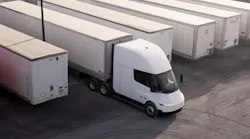 tsla_semi_enrd_1
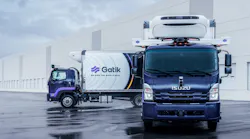
Greater activity in turns helps improve the economics of Einride’s freight work. On the conference call, Chief Technology Officer Henrik Green said the company’s more than 260 electric and 10 autonomous trucks are today producing a total cost of ownership advantage of between 5% and 10%, primarily from planning transportation using Einride’s Saga AI platform. As more data amassed over time enables more autonomous trucks, that TCO gap could grow to more than 25%, Green added.
Speaking to FleetOwner a few days after his team’s Q3 update, Charli said growing freight volumes also will allow Einride to lower its prices over time. Maintaining that “slight down curve,” he said, will become crucial selling points to shippers used to annual increases in operating costs.
A big key to that will be to automate more than just the actual driving: Pointing to his team’s work with GE Appliances in Selmer, Tennessee, Charli said Einride today shuttles autonomously between the manufacturing plant and the warehouse. Leveling up autonomous operations and really bending the cost curve will mean also loading and unloading, charging, and communicating without humans involved.
Einride and Aurora are neck-and-neck on progress and projections
With their projections for next year and beyond, Einride executives are forecasting a similar growth curve as their peers at Aurora Innovation. At the latter, Chairman and CEO Chris Urmson said last month that he’s targeting $200 million in 2027 revenues, up from a pace of about $80 million late this year, and steep growth from there.
Aurora’s leaders expect that the company’s fleet will grow from about 200 trucks to 1,000 by the end of next year. That, they say, will have Aurora on track to also become cash-flow positive in 2028 as it continues to grow.
For Einride, breaking even on a cash flow should require growing its fleet to about 1,750 trucks, CFO Anubhav Verma told analysts. Confidence in 2027’s forecasts is solid, he added, because two-thirds of the $250 million in expected revenue are covered by longer-term contracts.
Another milestone in the near future: Deploying the Einride Driver software-and-hardware system to move highway freight in the first half of 2028. Today, Einride trucks run at lower speeds and primarily in settings such as GE Appliances’ or in other controlled environments such as the port of Antwerp in Belgium. Green said the path to highway autonomous driving will in the next 18 months involve “running longer distances at higher speeds, including middle-mile rural deliveries.”
Asked if he’s impatient about Einride’s growth projections or having electric infrastructure become less of a sticking point for customers and prospects—Einride earlier this year paid nearly $40 million (for now) for charging management company Flipturn—Charli said he’s very much itching for Einride and the autonomous market as a whole to balloon.
“What soothes [my impatience] is that the trend is going in the right direction,” he said, adding that the narrative around electric trucks is improving. “And the multi-year contracts we have help solve the chicken-and-egg problem” around charging and other bottlenecks.
Investors are taking their time buying into Einride’s story as well as those of Aurora and fellow autonomous peer Kodiak AI. The shares of all three companies are all at least 55% below their 52-week highs, with Einride and Kodiak off 90%. On the afternoon of November 24, Einride (Ticker: ENRD) was changing hands at $1.53, giving the company a market value of $218 million.
About the Author
 Geert De Lombaerde
Senior Editor
A native of Belgium, Geert De Lombaerde has more than two decades of experience in business journalism. Since 2021, he has written about markets and economic trends for Endeavor Business Media publications FleetOwner, Healthcare Innovation, IndustryWeek, Oil & Gas Journal, and T&D World.
With a degree in journalism from the University of Missouri, he began his reporting career at the Business Courier in Cincinnati. He later was managing editor and editor of the Nashville Business Journal. Most recently, he oversaw the online and print products of the Nashville Post and reported primarily on Middle Tennessee’s finance sector and many of its publicly traded companies.