FleetOwner's top 10 IdeaXchange columns of 2021

Every week, trucking professionals write columns for FleetOwner, sharing their thoughts on a variety of topics, including retention, maintenance, asset management, zero emissions, safety, and more.
These experts offer a unique perspective because they are working in the industry day in and day out, listening to what those within the community are saying and offering solutions to the most pressing issues of the day.
Here's a look at the top IdeaXchange columns in 2021.
10. The best things I’ve learned about truck drivers
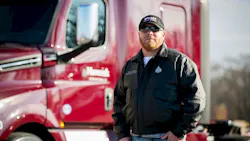
“You’ve probably heard that trucks and truck drivers are the most dangerous things on the road,” said the commanding officer. Some in our class of new highway patrol recruits nodded. The nodding stopped short when the CO continued, with emphasis, “Not true.”
The laws and regulations we enforce against trucking operations certainly outnumber the similar edicts aimed specifically at motorists. Trucks are large, mechanically complex, and often intimidating to others. Truck drivers, and their employers, are trying to earn a buck on the road. Therefore, many thought that truckers would at times bend the rules to do just that. Our CO acknowledged the accepted line of thinking and expected us to enforce the rules as written. He then added, the single most dangerous thing on the road, by whoever was behind the wheel, is “unsafe behavior.”
Check out the full article here.
9. It's not just about the trucks

The business case for electric trucks in certain applications is developing at a rapid pace. But when making decisions about EVs, fleets need to look beyond the vehicle itself and consider the whole electric vehicle ecosystem, including charging infrastructure, regulations, incentives, service support, etc.
While I have been encouraging fleets to dip their toes into the EV pool for some time, they also need to be aware that when it comes to EVs, it is not just a matter of purchasing the vehicle.
Check out the full article here.
8. Women are driving trucks in greater numbers—but we can recruit even more

Not quite 8%. That’s the number of women who are professional truck drivers in the U.S., according to American Trucking Associations’ (ATA) American Trucking Trends report. And that number—7.8%—is the largest percentage of women in trucking ever.
While I am thrilled that we’re at the highest percentage of women drivers ever, I can’t help but wonder why 7.8% is something to be excited about when, according to the U.S. Census Bureau, women make up 50.8% of the U.S. population. I think we can do better when it comes to recruiting and retaining women behind the wheel.
Check out the full article here.
7. Five steps to improving vehicle maintenance
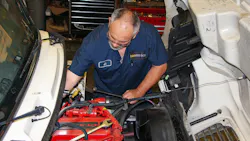
If you want to keep your trucks operating at peak performance levels, you need to make sure they are properly maintained. This is becoming increasingly important because of the microchip shortage that has stretched vehicle delivery times out into 2022. Fleets that had hoped to add new assets this year are finding that they must run existing assets longer because of the delayed delivery of the new trucks.
With that in mind, here are my thoughts on how to get the most out of your maintenance program.
Check out the full article here.
6. Now is the time to start spec’ing ADAS

Looking over my notes from the recent Corcentric Maintenance Meeting and Supplier Summit, I realized that advanced driver assistance systems (ADAS) are truly top of mind with fleets and manufacturers.
With presentations from Mack, Volvo, Eaton, Daimler, Peterbilt, American Transportation Research Institute, North American Council for Freight Efficiency, and some of our largest fleet clients, the consensus was that ADAS are almost to the point of a “must-have” for fleet operators.
Check out the full article here.
5. Fleets invest in technologies that lead to a cleaner future

The trucking industry has been doing its part in recent years to lower emissions and improve the fuel efficiency of the trucks on the road. We’ve all recognized that trucking has a role to play in a cleaner future.
That’s why I was very interested to read the section on sustainability in the National Private Truck Council’s Benchmarking Survey Report 2020. According to the report, 85% of the private fleets responding to the survey indicated they are making investments in green initiatives.
Check out the full article here.
4. Three things fleet managers should know about truck safety enforcement officers

You know the image: the crisp uniform, the official badge and nameplate, the wide-brimmed hat. But beyond the image, fleet managers need to know three important things about the officers who enforce truck safety.
Why? Because truck safety programs don’t succeed at a fleet just because of decisions made by one person. Safety is a team effort. And that means reaching out and looking beyond their uniform.
Check out the full article here.
3. Online training and developing driver trust

When a fleet is evaluating whether to implement online driver training, I’ll occasionally be asked: “How do you know if the driver actually completed the course?”
It might seem like a logical question since a fleet might be looking to augment or move away from in-classroom training where they know they can get a headcount and document driver attendance. Online means trusting the driver to do the courses. And, for some fleets, they might think online training will open a can of worms where drivers don’t actually go through the courses or have someone else take the courses instead.
Check out the full article here.
2. Of supply chain, aging trucks, parts availability, and private equity

There is so much going on in the world that is affecting trucking, and I thought it might be helpful to have it all down in one place to gain a better understanding of the entire picture.
Most of the news is focused on supply chain disruption and material shortages—most critically microchips—that is plaguing the trucking industry as well as impacting the overall economy.
Check out the full article here.
1. Learn from those who are doing
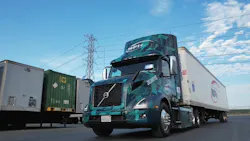
I was first introduced to the concept of gemba back in the 1990s. It is a Japanese word that means “the actual place.” The idea of gemba is to go somewhere to see the actual process and learn from those who are doing the work.
While the idea of gemba is usually applied to manufacturing, I think it also can be used more broadly to gain knowledge about a number of things. I particularly see it being applicable to electric trucks.
Check out the full article here.
About the Author
FleetOwner Staff
Our Editorial Team
Kevin Jones, Editorial Director, Commercial Vehicle Group
Josh Fisher, Editor-in-Chief
Jade Brasher, Senior Editor
Jeremy Wolfe, Editor
Jenna Hume, Digital Editor
Eric Van Egeren, Art Director
Related

 FleetOwner top 10 IX 2024

