Make your large fleet feel small through stronger leadership
Key takeaways
- Clear repair standards, documented inspections, and supervisor oversight help improve maintenance consistency across large fleets.
- Targeted technician training and mentoring can address skill gaps and strengthen repair quality.
- Fleet leaders should measure reliability, repeat repairs, and technician retention—not just maintenance spending.
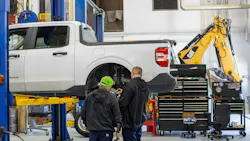
How leaders handle fleet management pressure can determine whether an asset leaves the shop ready to work or returns for another repair. That challenge anchored the NAFA Fleet Leadership Playbook session earlier this year, moderated by John Byron, technical fleet maintenance support at Fleetio, with George Arrants, VP of the ASE Education Foundation, and Liam Aghayev, COO of ITF Group, a full-service third-party logistics provider.
The panel mentioned how maintenance performance connects to the everyday decisions leaders make about standards, technician development, and accountability. They also discussed how teams need clear expectations, the resources to meet them, and leaders who reinforce operational quality.
Make standards visible and consistent
At ITF Group, which Aghayev said operates approximately 1,800 units, including 1,400 trailers and 400 trucks, maintenance standards begin when equipment enters the shop. Technicians document concerns through digital inspections, and supervisors prioritize work based on operational needs. Completed repairs then undergo a checkout process before equipment returns to service.
The process includes checking the work and conducting a test drive, while technicians record their names against the jobs they complete. That documentation creates personal responsibility and helps supervisors trace the work performed. For leaders overseeing a large fleet, consistent processes help make the operation feel smaller. Documented inspections, clear priorities, and repair sign-offs give supervisors a way to understand individual jobs while maintaining oversight across hundreds or even thousands of units.
Byron emphasized that leaders also have to set the example for the standards they expect from their crew. During his time managing shops, he wore the required protective equipment whenever he arrived on the shop floor, encouraging employees to hold him accountable if they saw him without safety glasses. That consistency makes accountability part of the culture; expectations carry more weight when employees can see they apply to everyone.
Protect technicians from pressure to rush
Written procedures are only effective if leaders uphold them year-round. Aghayev described how pressure from dispatchers and drivers can push technicians to focus on the immediate complaint while overlooking another component nearing failure. A truck may leave sooner, but another repair can put it out of service again shortly afterward.
ITF limits direct communication between dispatch and technicians so supervisors can manage requests and set expectations. Technicians focus on repairs, while supervisors maintain standards and communicate when equipment will be ready.
“As a leader, it is your job to stand between your technicians and the pressures of the operations of the company,” Byron said. That division of responsibility helps the crew work in sync. Supervisors coordinate operational demands, giving technicians the time and direction to complete repairs thoroughly.
Byron also noted the importance of explaining conditions affecting the work and finding alternatives when operations can’t wait. Aghayev said ITF can sometimes assign an available truck to a driver while the original unit remains in the shop. This addresses the operational need without forcing an unfinished repair through the checkout process.
 How maintenance impacts total cost of ownership in trucking
 ev1
Turn repair problems into targeted coaching
When a repair comes back, leaders need to understand what happened before deciding how to respond. The panel identified several possible contributors, including time pressure, unclear procedures, gaps in technical knowledge, missing service information, and inadequate tools.
Aghayev described reviewing technicians’ repair records to help distinguish between a training need and inconsistent execution. If a technician has successfully performed the task before, a supervisor can investigate why the process was not followed consistently. If the technician has not demonstrated the skill, additional instruction or pairing with a more experienced colleague may be needed.
Arrants, with the ASE Education Foundation, encouraged leaders to target training to demonstrate their specific needs. Reflecting on his experience chairing TMC SuperTech, he explained that technician competitions can reveal shared weaknesses across the entire company. If several participating technicians struggle in the same area, leaders have a reason to examine whether the broader team needs support in that skill.
He also stressed the importance of having access to service information and appropriate equipment. Technicians can’t be expected to know every procedure from memory, and coaching alone can’t fix a missing tool or inaccessible repair instructions. Leaders must address the conditions around the work as well as the employee’s performance.
Byron of Fleetio notes that mistakes can be seen as opportunities to intervene before a problem reaches the road, highlighting the importance of helping technicians improve without creating resentment. The goal is to understand the failure, reinforce the correct approach, and make the next repair more reliable.
Build a stronger crew through technician development
Development starts with recognizing that technicians arrive with different experience levels. A credential or a completed training program doesn’t eliminate the need for onboarding and guidance within a particular shop. Arrants recommended using test-preparation resources to identify strengths and areas for improvement before encouraging technicians to sit for professional certification exams. This approach can also make testing less intimidating for experienced technicians who learned primarily on the job.
Byron shared an example from a previous organization in which technicians took ownership of their skill matrices. Transparent discussions about readiness helped employees understand where they stood and what they needed to develop before advancing. At ITF, supervisors pair less experienced technicians with more skilled colleagues and introduce more advanced work as they demonstrate readiness. Aghayev stressed that employees should understand what that development means for their careers and pay. Training needs a visible benefit for the person doing the learning. The crews that win give people a reason to keep developing, and clear expectations for advancement help technicians see how building their skills contributes to both their own careers and the team’s performance.
Mentor selection deserves similar attention. Arrants advised choosing people who enjoy both the industry and the company, who can support a new employee, and who will not be financially penalized for spending time teaching. A strong technician is not automatically the right mentor, though. The assignment requires someone willing and able to help another person succeed.
Build the workforce before a position opens
Arrants challenged fleet leaders to become more involved with local technical education programs. Waiting until graduation or a career fair can mean missing students who have already built relationships with other employers. Facility visits, job shadowing, classroom participation, and part-time work can help students understand opportunities they might not otherwise associate with a fleet. Those relationships also give employers a chance to explain the skills their operations require.
It’s important to note that the investment needs to continue after hiring. New employees should learn the company’s processes, equipment, and expectations, even if they arrive with a well-developed technical foundation. Arrants advised against companies treating entry-level employees as fully expert technicians and then blaming them if an unsupported transition goes poorly.
For fleet leaders, developing a local talent pipeline and providing continued onboarding are dually important responsibilities. Bringing someone into the industry accomplishes little if the work environment quickly drives them away.
Measure reliability and retention alongside cost
Aghayev said ITF had moved beyond evaluating maintenance primarily by how much the shop spent. Necessary repairs still have to be completed, and spending figures need the context of equipment reliability and the cost of keeping each unit on the road. He described an inspection initiative that brought trailers into the shop when they passed through the company’s location, even without a driver complaint. Over time, ITF saw substantially lower trailer repair costs and less spending on roadside service, he reported.
The improvement took time to become visible. With roughly 1,400 trailers moving through various routes, the shop was unable to inspect the entire fleet at once. Aghayev emphasized the need to review results over multiple years to understand the change’s effect. Byron also encouraged leaders to examine whether training translates into better repair quality and productivity. Faster work has limited value if the same equipment keeps coming back.
Managing a large fleet generates plenty of data, but making sense of it can be difficult. For leaders managing thousands of assets, clarity comes from connecting spending, repeat repairs, inspection results, and technician development to understand where the operation needs attention.
Arrants added that another measure of leadership effectiveness is employee retention. Continually filling vacancies can conceal problems with hiring fit, onboarding, or culture. Tracking whether people stay gives leaders a reason to examine the work environment and invest in their existing employees. The good news is that those conversations don’t always require major programs. Asking employees what they like, what frustrates them, and what they would change can reveal manageable problems, from misplaced protective equipment to missing supplies. Addressing those concerns demonstrates that leaders are listening.
The crews that win are built through daily leadership decisions such as protecting time for quality repairs, helping technicians develop, and ensuring people have the information and resources to do their jobs well. Across a large fleet, those habits help leaders bring consistency to a complex operation while staying close to the people doing the work.
About the Author
 Rachael Plant
Rachael Plant is a senior content marketing specialist at Fleetio, a fleet maintenance and optimization platform that helps organizations run, repair, and optimize their fleet operations.
Related
 Sunrise Transport Four Seasons Produce Youtube 614b37366aa93