Clark: What fleets should know about autonomous trucking
Key takeaways
- Autonomous trucking could reduce fleet costs through lower labor expenses, improved fuel efficiency, and greater asset utilization.
- Driverless trucks will require new maintenance practices, specialized equipment, and ongoing certification of autonomous systems.
- Regulatory changes, technology costs, and infrastructure needs will influence how quickly fleets adopt autonomous trucks.
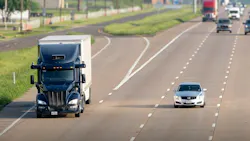
It seems like every day there is a new development in how machines, software, and AI are taking on tasks traditionally performed by humans—and the trucking industry is no exception. Autonomous vehicle technology is advancing, and the possibility of driverless trucks coming to a highway near you is very real.
While regulatory and operational hurdles remain, fleets should start considering what this transition could mean for their business.
Driverless trucks gaining momentum
Recently, several headlines have highlighted progress toward driverless commercial trucking.
Kodiak AI signed an agreement to put its autonomous driving system in 75 trucks owned and operated by DTL Transport, a Fresno, California, carrier that runs cross-country team loads for grocers. Under the agreement, DTL will own and operate the trucks and pay Kodiak a per-mile fee to use the Kodiak Driver.
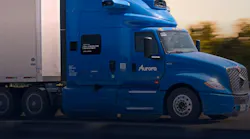
Aurora Innovation, the first to launch driverless trucks, has also secured recent customer commitments, including an agreement with Charger Logistics to deploy up to 500 Aurora-powered trucks. The company plans to run more than 30,000 driverless trucks by 2030.
On the regulatory front, the Federal Motor Carrier Safety Administration (FMCSA) approved a five-year exemption through October 2031, allowing qualifying Level 4 autonomous truck operators to use cab-mounted warning beacons instead of traditional roadside warning devices. This is a significant milestone but is not a blanket exemption from federal trucking safety requirements.
 aur_truck_3

Economic opportunity
As with most technology deployments, a major catalyst for autonomous trucking is the potential to reduce costs.
According to Greentree Advisors, as presented by NationaLease Board Member Ken Davis, driver wages and benefits account for about 44% of truck operating costs. Reducing driver-related expenses could therefore create significant savings.
Fuel efficiency presents another opportunity. It’s estimated that every 5 mph increase above 55 mph reduces fuel efficiency by about 8.5%. For example, operating at 65 mph instead of 55 mph could reduce fuel efficiency by approximately 17%, while operating at 70 mph could reduce it by 25%. Fleets could program their autonomous trucks to run at consistent, fuel-efficient speeds, which could translate into additional savings.
Another economic benefit is the potential to increase asset productivity. Traditional trucks are subject to driver hours-of-service (HOS) limitations, which restrict how long a driver can operate a vehicle before taking required breaks and rest periods. Driverless trucks could operate beyond those limits, meaning assets could cover more miles. However, autonomous operations will still have to comply with applicable federal and state requirements, and regulations about driverless commercial vehicles are evolving.
Rethinking truck design and maintenance
An autonomous truck will look different from a traditional vehicle; redundant systems, sensors, computing hardware, and other technology components will require significant investment.
But some offsets come into play. Without a driver in the cab, future autonomous truck designs may no longer require certain driver-focused features, including:
- Steering wheels, pedals, and traditional instrument panels
- Driver seats, sleeper compartments, and associated amenities
- Mirrors and certain other driver-interface components
- Traditional HVAC configurations and auxiliary power units designed for driver comfort
- Certain other driver-facing controls and equipment
Not every element you see in traditional vehicles will be completely wiped out. It’s going to depend on safety standards and regulations.
The role of maintenance in driverless trucks will also look different. These vehicles will be continuously connected and monitored by their technology providers or OEMs. Fleets will have to account for the inspection, maintenance, and certification of both traditional vehicle components and sophisticated autonomous systems.
Once again, regulations will likely involve the periodic certification of components and maintenance, while transfer hubs may become a part of infrastructure to serve as locations for inspections, maintenance, and service.
Preparing for what’s next
The shift to autonomous trucking is not going to happen overnight, as adoption is influenced by many factors—from regulations and geographic limitations to technology costs and infrastructure investments.
Now is the time for fleets to evaluate how autonomous vehicles can fit into their long-term strategies and how this transition could affect the entire industry.
About the Author
Jane Clark
Senior VP of Operations
Jane Clark is the senior vice president of operations for NationaLease. Prior to joining NationaLease, Jane served as the area vice president for Randstad, one of the nation’s largest recruitment agencies, and before that, she served in management posts with QPS Companies, Pro Staff, and Manpower, Inc.
Related
 AI in trucking
 trucking tech

