Clark: What fleets need to know about EPA’s proposed 2027 NOx rule changes
Key takeaways
- EPA’s proposed 2027 NOx rule revisions could affect engine costs and emissions compliance timelines.
- Fleets face continued uncertainty as EPA reviews proposed changes to heavy-duty emissions requirements.
- Equipment planning and maintenance remain critical as fleets prepare for potential regulatory changes.

The waiting game continues for the Environmental Protection Agency (EPA) to issue its final decision on nitrogen oxide standards, widely known as the “NOx rule.” In July of this year, the agency unveiled its proposal to revise several provisions of its 2023 heavy-duty nitrogen oxide emissions rule but has yet to give the official green light to the rulemaking. With model year 2027 approaching, it’s important for fleets to understand where things stand.
Let’s rewind to 2023
To understand the status of the NOx rule today, we must briefly revisit 2023. EPA’s original heavy-duty emissions rule, which was finalized in January 2023, established more stringent NOx standards for model year 2027 and newer heavy-duty engines.
Under the rule, the allowable NOx emissions limit for heavy-duty engines drops from 0.20 grams per brake horsepower-hour (g/bhp-hr) to 0.035 g/bhp-hr—a reduction of over 80%. The goal was to significantly reduce nitrogen oxide emissions, which contribute to smog and other issues related to air quality.
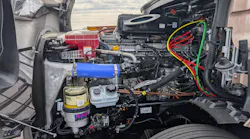
The regulation also introduced testing based on low-load and idle cycles, which forced manufacturers to keep aftertreatment systems functioning while the engine was running relatively cold. Manufacturers were required to add large heating elements to their aftertreatment systems as a result of the testing modificaton.
The last additions were warranty and useful life extensions. EPA required emissions systems to maintain compliance for 50% longer (up to 650,000 miles) and required manufacturer warranties to be 450% longer (up to 450,000 miles).
This rulemaking raised concerns across the trucking industry about the cost of developing and manufacturing compliant engines as well as the potential impact on truck prices and maintenance. Some experts estimated a cost increase of as much as $15,000 for a new power unit in MY 2027.
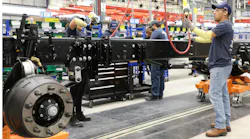 International Motors truck manufacturing facility
What happened in July 2026
Fast forward to July 2026, when EPA unveiled its new rulemaking to reduce the costliness of MY 2027 NOx standards. A key point: the proposal does not change the underlying NOx emissions limits or the tighter testing requirements.
Here’s a look at what the proposed amendments focus on:
- Emissions warranty requirement: Maintain the current five-year/100,000-mile emissions warranty (the original rule, as stated above, increased coverage for heavy-duty engines to as much as 10 years or 450,000 miles).
- Useful life requirements: Delay the implementation of extended useful life requirements from MY 2027 to MY 2030.
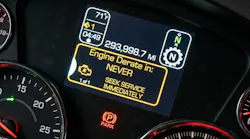
- Diesel exhaust fluid (DEF) system requirements: Replace mandatory DEF-related speed and power derates with visible and/or audible dashboard warnings. Under the updated guidance, the final inducement speed increases from 5 mph to 25 mph, while the repair window massively widens from four hours to as much as 160 hours.
- Nonconformance policies: The framework allows manufacturers to continue selling MY 2026-compliant engines for a small fee, called Nonconformance Penalties (NCPs). This gives manufacturers that are unable to meet the new standards on time an alternative to immediately achieving full compliance, provided they meet eligibility requirements.
The current status of NOx
The public comment period for the proposed rulemaking closed on August 29, and EPA has been reviewing the comments ever since. EPA has stated that it is working to finalize the rule as quickly as possible, but a final decision may not be issued until next year.
What fleets can do right now is focus on operational efficiency, maintenance excellence, and equipment planning that delivers value under any regulatory outcome. When the final rulemaking picture becomes clear, fleets that have maintained discipline will be in the strongest position to adapt.
About the Author
Jane Clark
Senior VP of Operations
Jane Clark is the senior vice president of operations for NationaLease. Prior to joining NationaLease, Jane served as the area vice president for Randstad, one of the nation’s largest recruitment agencies, and before that, she served in management posts with QPS Companies, Pro Staff, and Manpower, Inc.