U.S. agencies urge stronger cybersecurity for industrial refrigeration and cold chain systems
Key takeaways
- Federal agencies warn that cyberattacks can manipulate refrigeration controllers and disrupt temperature visibility.
- Refrigerated transportation systems are among vulnerable cold chain monitoring technologies.
- CISA recommends restricting remote access, updating firmware, and monitoring refrigeration system activity.

The Cybersecurity and Infrastructure Security Agency (CISA), Federal Bureau of Investigation (FBI), Department of Health and Human Services (HHS), U.S. Department of Agriculture (USDA), and U.S. Department of Transportation (DOT) are urging stronger cybersecurity protections for industrial refrigeration and cold chain monitoring systems.
The organizations are warning that malicious cyber actors are targeting electronic temperature controllers and commercial refrigeration controllers in grocery and cold storage facilities. These systems are also widely used in refrigerated transportation to monitor temperatures, maintain continuous temperature records, manage defrost cycles, and optimize energy use.
Attackers may exploit unpatched vulnerabilities, authentication weaknesses, and internet-accessible controllers to remotely change system settings. In some cases, malicious actors can force refrigeration units into continuous heating and defrost cycles, potentially causing inventory losses and equipment hazards.
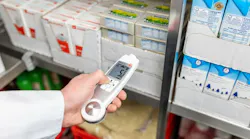
Successful attacks could also change temperatures enough to shorten equipment service life, create fire hazards, or make stored products unsafe for consumption. Cyber actors may additionally disrupt visibility into current temperatures, creating what the agencies describe as a denial-of-view condition.
The authoring organizations recommend that industrial refrigeration and cold chain system owners and operators take the following actions:
- Eliminate public internet exposure: Keep control system devices and controller panels off the public internet. Secure necessary remote access through updated firewalls or edge devices.
- Isolate operational technology: Establish dedicated virtual local area networks (VLANs) to separate operational technology (OT) devices from business networks.
- Strengthen authentication: Replace default passwords, enforce strong password policies, and implement phishing-resistant multifactor authentication where feasible.
- Update equipment: Keep device firmware current and replace unsupported equipment that has reached its end of life.
- Restrict network access: Use device and IP address allowlisting to limit which systems can make changes.
- Maintain backups: Keep current backups offline and offsite, and regularly test restoration capabilities.
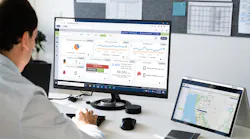
- Monitor system activity: Enable logging, review records for unexpected activity, and collect network traffic when OT devices do not support standard logging.
- Establish safe operating limits: Set reasonable temperature and operating limits for downstream devices and create alerts for deviations.
The recommendations align with CISA and the National Institute of Standards and Technology's (NIST) Cross-Sector Cybersecurity Performance Goals, which outline baseline cybersecurity practices for organizations.
Organizations that identify suspicious or criminal activity can report incidents to CISA's 24/7 Operations Center at [email protected] or 844-729-2472. Reports can also be submitted through the FBI's Internet Crime Complaint Center.
What this means for the trucking industry
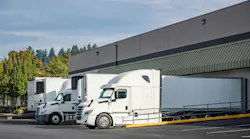
Cybersecurity threats to refrigeration systems extend beyond warehouses and cold storage facilities. Refrigerated transportation operations also rely on electronic controls and continuous temperature monitoring to protect cargo.
A compromised controller could leave fleet operators without reliable temperature visibility or alter operating conditions without their knowledge. For refrigerated carriers, this creates potential exposure to cargo losses, equipment damage, food safety concerns, and service disruptions.