Fleetworthy unveils RADAR, its AI layer for safety, compliance intelligence
Key takeaways
- Fleetworthy's new AI tool—RADAR—answers questions about toll activity using a fleet’s Fleetworthy data.
- Fleetworthy plans wider releases and new functions throughout 2027.
- Future features may automate tasks, such as toll disputes.
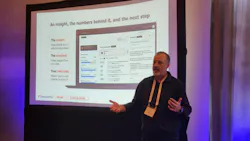
NASHVILLE, Tennessee—A new tool is coming to help fleets find toll leakage and compliance bottlenecks.
Safety, compliance, and toll bypass technology company Fleetworthy unveiled its integrated large language model (LLM) functions for customers today. The company gave customers an early peek at the tool yesterday during its third Roadshow customer conference in Nashville.
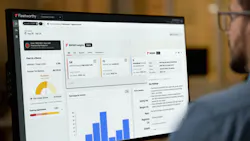
Fleetworthy calls its new AI tool RADAR—standing for Real-time AI, Decisioning, and Automated Resolution. RADAR is an LLM embed that lets users query their data in natural language.
While the tool is still early in development, Fleetworthy sees RADAR as, ultimately, an agentic workflow engine for the company’s wide scope of solutions. For now, the tool is a natural language interface for Fleetworthy’s tolling data.
“Our goal is to create a virtual assistant that scrutinizes the data, identifies optimization opportunities and recommendations, and proactively informs fleet managers to improve operations,” said Levi Sorenson, VP of AI Strategy at Fleetworthy.
How the AI layer works
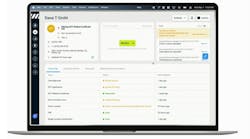
RADAR operates natively within the existing Fleetworthy dashboard. Fleets can use the tool through a chat menu and proactive data alert cards.
Through the chat interface, fleet managers can ask questions about their toll activity, such as why a charge appeared or how a transponder is performing. RADAR answers using the fleet’s own Fleetworthy data.
RADAR can also bring important data insights to the platform’s dashboard, highlighting anomalous tolls, spending trends, or savings opportunities, along with recommended next steps for managers.
 wern_truck_1
Fleetworthy’s AI focus
Fleetworthy formed an AI team a year and a half ago and created a new “AI product leader” position. The company’s aggressive acquisitions strategy was sometimes motivated by AI expertise.
“Some of the companies that we acquired were because we knew they were diving into AI,” Shay Demmons, Fleetworthy's chief product officer, said. “They were leveraging different ways that we thought was unique.”
Of course, the usefulness of AI tools mostly comes from the tedious, careful work of data orchestration. Fleetworthy, with access to a wealth of operational data, first needed to clean and structure legacy data across multiple acquisitions.
“The reason we can leverage AI in a solution like RADAR is because we did all the work at the data level,” Michael Precia, president and chief revenue officer at Fleetworthy, said. “Rationalizing the data, making sure that we can layer on things that are very valuable to customers was important, and we did a lot of work in the last year to do that.”
“What we really wanted to do is focus on safety concerns, things that might keep assets or drivers off the road, and toll leakage,” Shay Demmons, chief product officer for Fleetworthy, told industry media during Roadshow. “That’s the baseline for what RADAR is about: to bring those things up to the surface, so that the back office can focus more on ‘where should we be focused to help move the economics of our fleet forward?’”
Fleetworthy worked with piloting customer fleets and its customer advisory board to flesh out the feature. The company said its pilot customers found RADAR useful.
“They’ve been able to quickly identify toll leakage that otherwise was difficult to find,” Demmons said. “Secondly, they found a much easier way to ask questions and say, ‘Hey, tell me what is going on. Tell me where my transponders are, tell me the trucks that don’t have transponders.’ Historically, they would have to go spend time in reports.”
Big plans for RADAR: Expansions, agents
For fleets looking to get their hands on the tool, availability is rolling out in stages. RADAR is currently in limited access, available to only a few interested customers.
“Today is limited access,” Demmons said. “Everyone that’ll be here will have an opportunity to say ‘Hey, we’re interested,’ and we’ll sign them up.”
Fleetworthy will fully release the tool and expand its functionality across 2027:
- The tolling functions will be released for general availability in the first quarter of 2027.
- A closed beta for the compliance and bypass technologies will be available in the first quarter of 2027.
- The company also plans to include agentic AI actions and more guided workflows sometime in 2027.
The company’s plans for automated actions include features such as automated toll disputes or transponder inventory reordering.
“A follow-on phase to this that we’re working on is taking those insights and moving them to workflows, so that we can start to solve the problem for them on the fly,” Demmons said. “We don’t want to stop at ‘hey, here’s the highest areas you should know about,’ but more so, how do you actually resolve those issues.”
Across those future expansions, the system will, eventually, give back-office teams a comprehensive view of their operations.
“We want to interconnect those things, where you can start to say ‘Holistically, what is going to have the biggest impact on my business in terms of cost, risk, and compliance?’” Demmons said.
Fleetworthy hasn’t established a firm pricing plan for the functions, but Demmons suspects some parts of RADAR will be available to all customers, while advanced features such as workflows will likely cost more.
About the Author
 Jeremy Wolfe
Editor
Editor Jeremy Wolfe joined the FleetOwner team in February 2024. He graduated from the University of Wisconsin-Stevens Point with majors in English and Philosophy. He previously served as Editor for Endeavor Business Media's Water Group publications.